
Walk into an electronics store and take a quick look at the earphone section. What catches your eye first?
It is usually not a long list of technical specifications. It is the product itself—and, just as importantly, how that product is presented.
A pair of premium wireless earbuds placed flat on a crowded counter can look surprisingly ordinary. Put the same earbuds on a clean, well-designed display stand with clear branding and thoughtful product positioning, and the impression changes immediately.
That is where an earphone display stand comes in.
An earphone display stand does more than hold a pair of earbuds or headphones. It helps organize products, improve visibility, communicate brand identity, and make it easier for shoppers to interact with the product.
For electronics brands, retailers, distributors, and visual merchandising teams, the display stand may be a small part of the retail environment—but it can have a surprisingly big job.
So, what exactly is an earphone display stand? What types are available? Which features actually matter? And how do you choose the right one?
Let’s take a closer look.
What Is an Earphone Display Stand?
An earphone display stand is a retail fixture designed to hold, organize, and present earphones, earbuds, headphones, or related audio products.
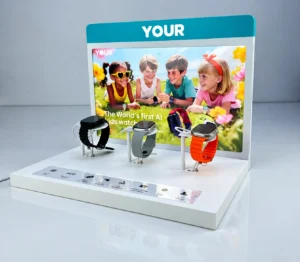
You will often see these displays in electronics stores, mobile phone shops, department stores, shopping mall kiosks, brand showrooms, exhibitions, and product launch events.
Depending on the design, an earphone display stand can be used for:
• Bluetooth earphones
• True wireless stereo (TWS) earbuds
• Neckband earphones
• Over-ear headphones
• Charging cases
• Wired earphones
• Audio accessories
• Multiple models from the same product range
Some stands are very simple. A clear acrylic holder placed on a retail counter may be all that is needed.
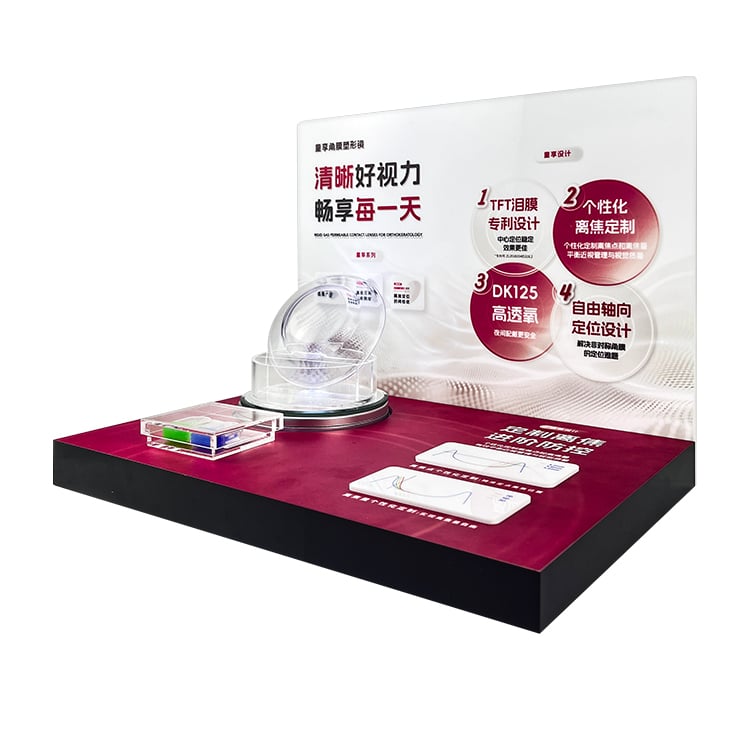
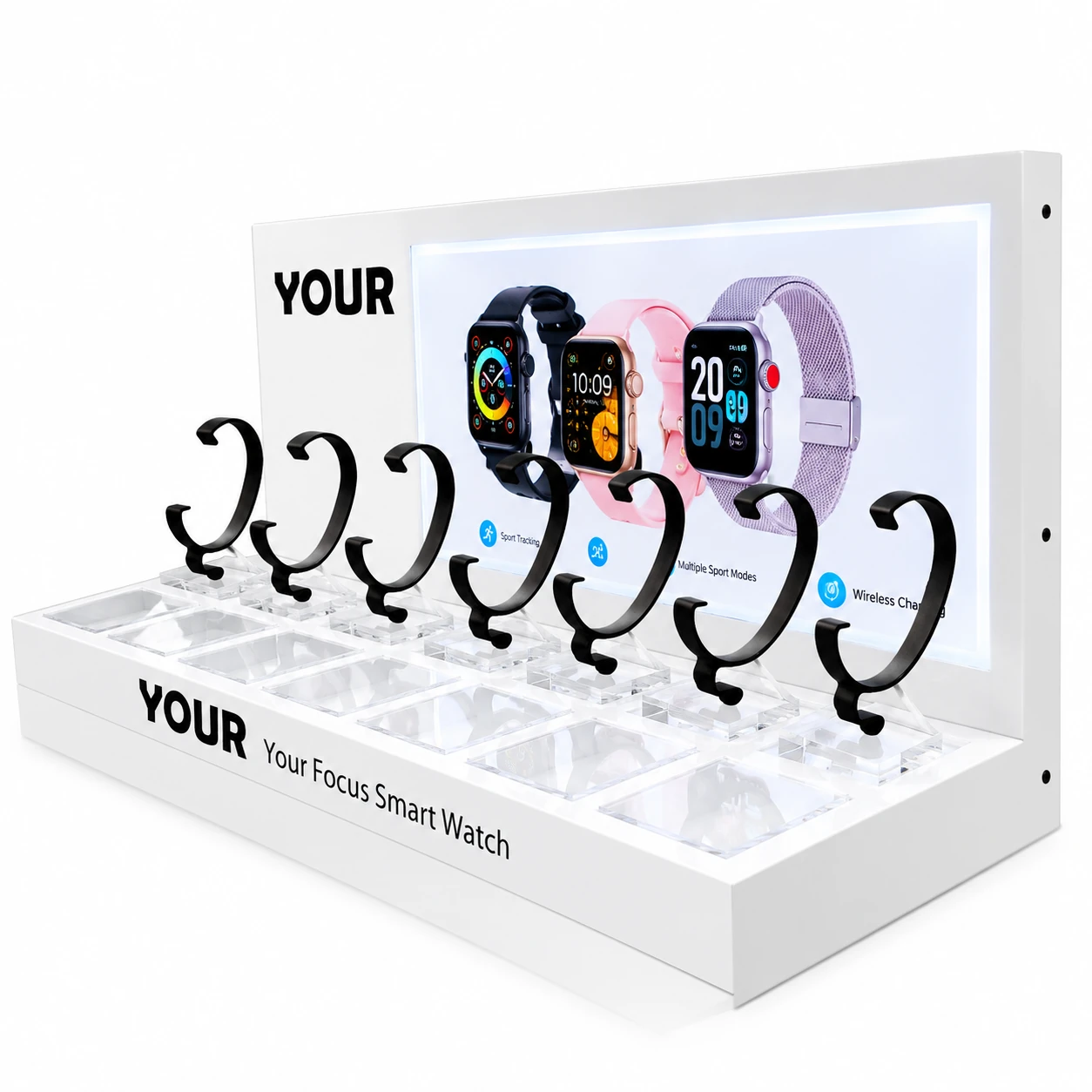
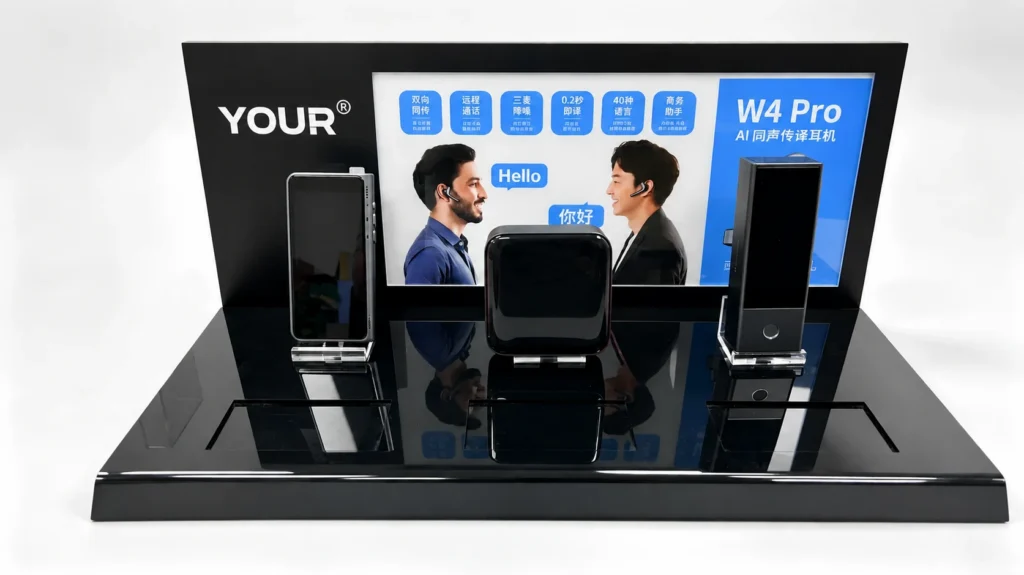
Others are more advanced and may include LED lighting, charging ports, security cables, printed graphics, product information panels, or interactive functions.
The basic goal, however, remains the same: make the earphones easier to see, understand, try, and buy.
Why Does an Earphone Display Stand Matter?
Earphones are small products.
That sounds obvious, but it creates a real challenge in retail.
A pair of wireless earbuds can easily disappear visually when placed next to smartphones, chargers, power banks, smart watches, cables, cases, and dozens of other accessories.
The product might have excellent sound quality and clever technology, yet still struggle to attract attention if the presentation is poor.
A display stand gives the product its own stage.
Think of it like a picture frame. A good frame should support the artwork without stealing attention from it. An earphone display should work in much the same way.
Customers can quickly notice the product, identify the brand, understand its main features, and—where the store allows it—pick it up and experience it.
Good retail presentation can also make the entire product area feel more organized.
And yes, appearances matter.
Customers may not consciously think, “That is a well-designed acrylic display stand.” They simply feel that the product looks cleaner, more professional, and perhaps more premium.
That subtle difference is exactly what good visual merchandising is supposed to achieve.
What Are the Main Types of Earphone Display Stands?
There is no single display design that works for every earphone brand or retail environment.
The right structure depends on the product, available space, number of models, customer interaction, security requirements, and brand identity.
Here are some of the most common types.
1. Countertop Earphone Display Stands
Countertop displays are one of the most common choices for wireless earbuds and compact earphones.
As the name suggests, they sit directly on a counter, product table, shelf, or display cabinet.
They are usually compact, which makes them useful in stores where every bit of counter space matters.
A typical countertop earphone display may include a holder for the earbuds, a position for the charging case, a logo area, and a small information panel.
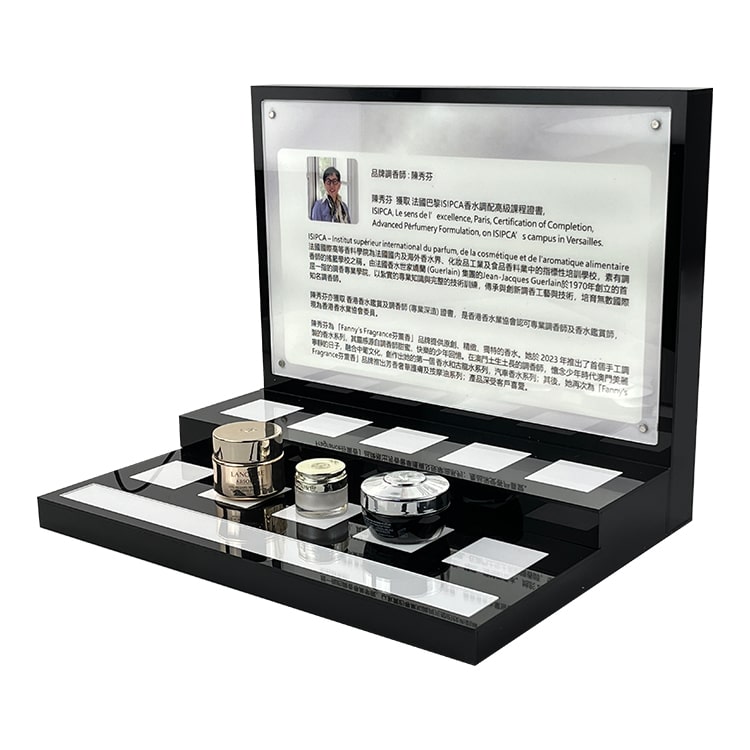
Some designs display only one model. Others can hold several products side by side.
Countertop displays are particularly useful for:
• Mobile phone stores
• Electronics shops
• Shopping mall kiosks
• Department stores
• Promotional counters
• New product launches
Their biggest advantage is simplicity. They put the product close to the customer without requiring a large retail fixture.
2. Single-Product Earphone Display Stands
Sometimes one product deserves all the attention.
A single-product display is designed around one specific earphone or headphone model. It is often used for flagship products, premium models, new releases, or promotional campaigns.
Because there is only one hero product, the designer has more freedom to build the visual presentation around it.
The product can sit at the ideal viewing angle. The logo can be positioned precisely. Product information can focus on the features that matter most.
There is less visual noise.
For a brand launching an important new model, that focus can be valuable.
3. Multi-Product Earphone Display Stands
What if you need customers to compare several models?
That is where multi-product displays make more sense.
These stands can hold several earphones or earbuds in one organized structure.
For example, a brand might display an entry-level model, a mid-range model, and a premium noise-cancelling model together.
Customers can see the differences without walking to another section of the store.
This type of display can also work well for different colors or versions of the same product.
The challenge is keeping the layout clean.
Put too many products on a small display and it starts to feel crowded. Give every model enough breathing room, and comparison becomes much easier.
4. Acrylic Earphone Display Stands
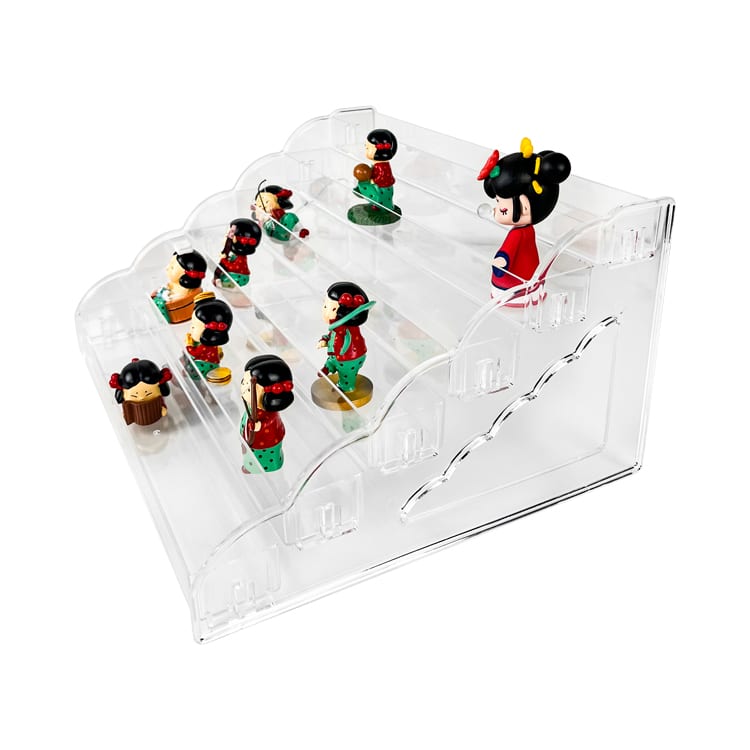
Acrylic is widely used for earphone displays, especially when a clean and modern appearance is required.
Why?
One reason is visual simplicity.
Clear acrylic does not compete heavily with the product. Instead, it can create an almost floating appearance, keeping attention on the earphones themselves.
Acrylic is also available in many finishes and colors.
Clear acrylic works well for minimalist displays. Black acrylic can create a stronger technology-inspired look. White acrylic often feels clean and modern, while frosted or colored acrylic can support a particular brand identity.
The material can also be cut, bent, polished, printed, engraved, and combined with other components.
That gives designers plenty of flexibility.
An acrylic earphone display can be as simple as a small clear holder—or it can become part of a larger branded retail fixture with graphics, lighting, metal parts, and electronic components.
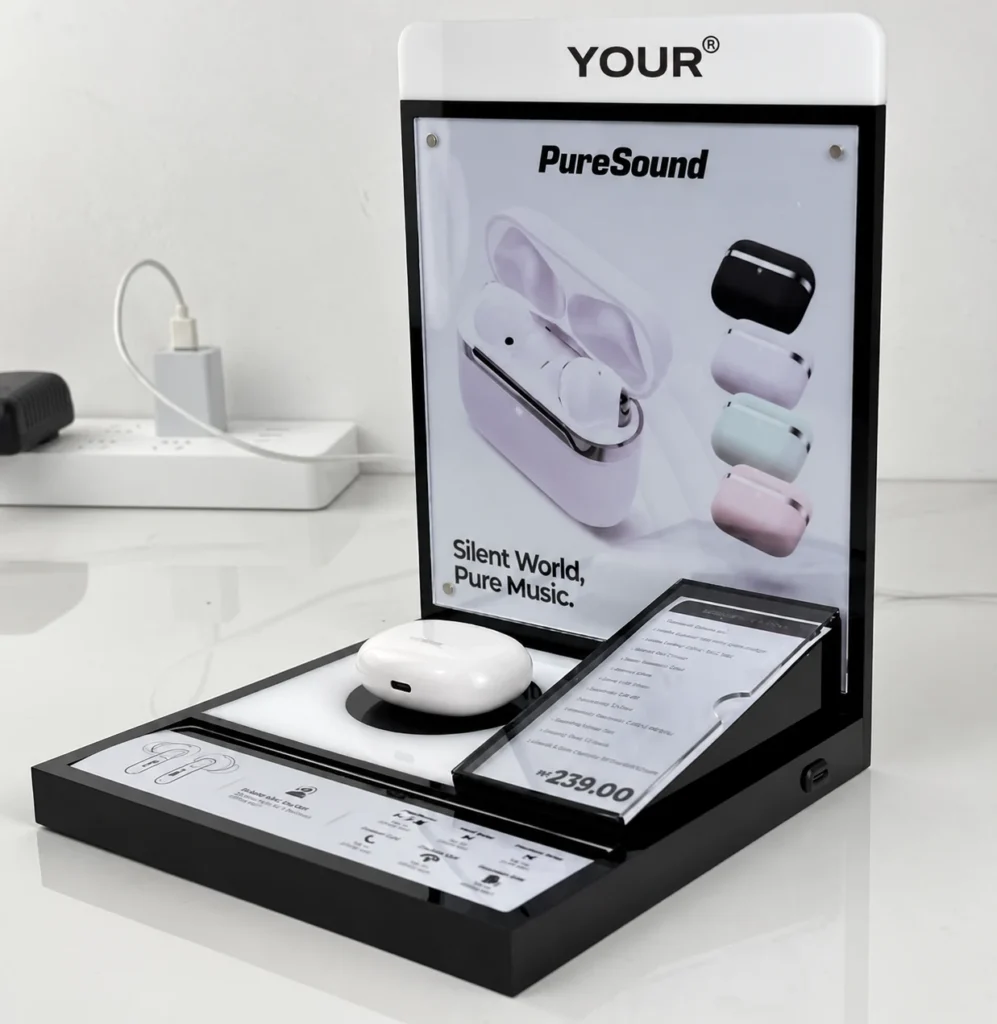
5. Anti-Theft Earphone Display Stands
Retailers face an awkward problem.
They want customers to touch the product, but they also need to protect it.
Premium wireless earphones and headphones are relatively small and can have significant retail value. Leaving demo products completely unsecured may not be practical.
Retailers commonly use merchandise protection measures to help reduce theft and protect products in physical stores.
Anti-theft earphone display stands can use security features such as:
• Retractable security cables
• Security tethers
• Alarm sensors
• Locking structures
• Concealed fasteners
• Secured charging cables
The goal is not to make the product impossible to touch.
Quite the opposite.
A well-designed security system should let customers handle the product naturally while reducing the risk of theft.
It is a balancing act: enough freedom to create a useful product experience, but enough control to protect the merchandise.
6. Charging Earphone Display Stands
There is little value in offering an interactive earphone demo if the product is always out of battery.
For that reason, some earphone displays include charging functions.
Depending on the device, the display may support USB, USB-C, wireless charging, or another suitable charging method.
The important part is not simply supplying power.
Cable management matters too.
Loose cables hanging across the display can quickly ruin a polished presentation. Charging wires should therefore be considered during the design stage rather than added as an afterthought.
A good display keeps cables organized while still allowing store staff to access them when maintenance is needed.
It sounds like a small detail. In daily retail use, it is anything but small.
7. LED Earphone Display Stands
Lighting attracts attention, which makes LED elements popular in electronics displays.
But there is a catch.
More light does not automatically mean a better display.
Too many bright LEDs can overwhelm a small product and make the fixture feel busy.
Subtle lighting is often more effective.
LEDs can be used to highlight a logo, illuminate the product area, create an edge-lighting effect, or make the display more noticeable from a distance.
The key is restraint.
The customer should notice the earphones first—not spend five seconds wondering why the display looks like a miniature nightclub.
8. Interactive Earphone Display Stands
Some products are difficult to sell through appearance alone.
Noise cancellation is a good example. You cannot see it.
Sound quality is another.
An interactive display can help turn those invisible features into something the customer can actually experience.
Depending on the retail concept, interactive earphone displays may allow shoppers to:
• Listen to sample audio
• Test the earphones
• Compare different models
• Scan a QR code for more information
• Watch a product video
• View technical specifications
• Explore key features on a digital screen
This approach is particularly useful for premium audio products where the customer needs more than a quick visual impression before making a decision.
What Features Should a Good Earphone Display Stand Have?
A display can look attractive in a design rendering and still be frustrating in a real store.
That is why appearance is only part of the equation.
Several practical features deserve attention.
Good Product Visibility
The product should be easy to see from a normal viewing angle.
Large panels, oversized logos, thick structures, or unnecessary decorations should not hide the earphones.
Remember: the stand supports the product.
The product should remain the star.
Stable Product Placement
Earbuds are small and lightweight.
If they constantly slide, tilt, or fall out of position, the display will quickly look messy.
The holder should therefore match the product dimensions and shape closely enough to keep everything where it belongs.
This becomes even more important in busy stores where customers handle demo products throughout the day.
Clear Brand Presentation
Branding should be visible without becoming overwhelming.
Depending on the display design and material, branding can be added through techniques such as UV printing, screen printing, vinyl graphics, laser engraving, acrylic logo panels, or metal logo plates.
The method should match the visual identity of the product.
A premium minimalist brand may want very subtle branding. A promotional campaign may call for something bolder.
There is no universal answer.
Clean Cable Management
Nobody gets excited about cable management—until it goes wrong.
Visible adapters, tangled wires, and loose charging cables can make an expensive display look unfinished.
Good cable routing keeps the customer-facing area clean while allowing store employees to replace or maintain components when necessary.
This is especially important for displays with charging or security functions.
Security
If customers can handle the earphones, some form of security may be needed.
The security method should fit the value of the product and the retail environment.
Too little security creates risk.
Too much security can make the product unpleasant to test.
The sweet spot lies somewhere between the two.
Easy Cleaning and Maintenance
Retail displays are touched. A lot.
Dust, fingerprints, and small marks are inevitable, particularly on glossy surfaces.
Store staff should therefore be able to clean the stand without removing half the structure.
They should also be able to replace products, update graphics, access cables, and maintain electronic components without unnecessary hassle.
A beautiful display that is difficult to maintain rarely stays beautiful for long.
Which Materials Are Used for Earphone Display Stands?
Different materials create different visual and structural effects.
Many custom displays combine two or more materials.
Acrylic
Acrylic is especially common in electronics retail displays because it offers a clean appearance and considerable design flexibility.
It can be clear, colored, frosted, printed, polished, bent, or combined with lighting and other materials.
For small electronics such as earbuds, clear acrylic is particularly useful because it creates less visual obstruction around the product.
Metal
Metal is often used when additional strength or a more industrial appearance is required.
It may form the base, internal frame, security structure, brackets, or decorative elements.
Metal can give a display a solid, premium feel, although an all-metal structure may appear visually heavy for very small earphones.
Wood
Wood introduces warmth and texture.
It can suit lifestyle-focused brands, natural store interiors, or retail concepts that deliberately want to soften the technical appearance of electronics.
That said, material choice should make sense for the brand.
A futuristic pair of AI-enabled earbuds on a rustic farmhouse-style block of wood might feel a little… confused.
Other Plastics
ABS, PVC, and other plastic materials may also be used, particularly for molded components or higher-volume production.
The right choice depends on the structure, quantity, appearance, production method, and budget.
Where Are Earphone Display Stands Used?
Earphone displays are used across a wide range of commercial environments.
Common applications include:
• Consumer electronics stores
• Mobile phone shops
• Telecom stores
• Department stores
• Airport retail stores
• Brand flagship stores
• Shopping mall kiosks
• Distributor showrooms
• Trade shows
• Product launch events
• Electronics sections in supermarkets
The same display structure will not necessarily work equally well in all of these environments.
A trade show display may need to be lightweight and easy to transport.
A permanent retail fixture may place greater emphasis on durability.
A flagship store may need a more refined presentation with lighting, interactive elements, or carefully integrated branding.
The environment changes the job of the display.
How Do You Choose the Right Earphone Display Stand?
Before thinking about acrylic thickness, LED colors, or logo placement, start with a few basic questions.
How many products will be displayed?
One hero model? Three different models? An entire product family?
Will customers be allowed to test them?
If so, charging and security may need to become part of the design.
Where will the display be placed?
Measure the available space. Really—measure it.
A display that looks perfectly proportioned on a computer screen can suddenly become awkward when it arrives at a crowded retail counter.
You should also think about what the customer needs to notice first.
Is it the product itself?
The brand?
A new technical feature?
A promotional price?
Trying to communicate everything at once usually creates clutter. A stronger display establishes a clear visual hierarchy and lets the customer understand it almost instantly.
Standard or Custom Earphone Display Stand?
Standard display stands can work perfectly well for straightforward applications.
They are generally useful when branding and product-specific features are not major requirements.
Custom earphone display stands become more relevant when the fixture needs to match a specific product or retail campaign.
A custom design can take into account:
• Exact product dimensions
• Brand colors
• Logo placement
• Retail counter dimensions
• Charging requirements
• Anti-theft requirements
• LED lighting
• Product information
• Assembly requirements
• Packaging and transportation
And custom does not necessarily mean complicated.
Sometimes the most effective custom display is remarkably simple.
The difference is that every element has a purpose.
What Should B2B Buyers Check Before Ordering Custom Earphone Displays?
For purchasing managers, brand teams, and distributors, approving a nice-looking 3D rendering is only the beginning.
Before mass production, several details should be confirmed.
Check the overall dimensions and product holder dimensions carefully.
Confirm the material and acrylic thickness.
Review logo position, printing colors, charging components, cable routing, security features, assembly method, and packaging structure.
It is also useful to understand sample and production lead times before planning a retail launch.
Most importantly, when possible, test a physical sample with the actual product.
A prototype can reveal things that are easy to miss on a screen.
Perhaps the charging case sits too loosely.
Maybe a cable bends at an awkward angle.
The logo might look smaller than expected.
Store staff may discover that replacing the demo unit is unnecessarily difficult.
One small problem on one sample is easy to correct.
The same problem repeated across hundreds of finished displays? Not so much.
A Good Earphone Display Almost Disappears
Here is a slightly strange thought: one sign of a good display stand is that customers may barely notice the stand itself.
They notice the product.
They understand where to look.
They can see the brand.
If interaction is allowed, they know how to pick up the demo unit.
The cables stay out of the way.
Nothing feels confusing.
That is the quiet strength of good retail display design.
It attracts attention first, then gets out of the product’s way.
For something as compact as wireless earbuds, that balance can make a meaningful difference.
Final Thoughts
An earphone display stand is far more than a simple product holder.
It can organize merchandise, improve product visibility, strengthen brand presentation, support demonstrations, provide security, keep demo products charged, and create a smoother retail experience.
The right solution depends on the earphones, store environment, available space, customer interaction, brand identity, and project budget.
For one project, a simple clear acrylic countertop stand may be exactly right.
Another project may require custom branding, LED lighting, anti-theft cables, charging functions, and several product positions.
There is no single design that works for everyone.
A useful rule is much simpler: start with the product, the retail space, and the customer experience. Then design the display around those needs.
When those pieces fit together, the stand does what it should do—puts the earphones where they belong: at the center of attention.
Frequently Asked Questions
What is the best material for an earphone display stand?
Acrylic is widely used for earphone display stands because it offers a clean appearance, good visual clarity, low visual weight, and many customization possibilities. Metal, wood, ABS, and other materials can also be used depending on the structure and desired style.
Can an acrylic earphone display stand include charging functions?
Yes. A custom acrylic earphone display stand can be designed around suitable USB, USB-C, wireless charging, or other power components. Cable routing and maintenance access should be considered during the design stage.
How do I choose a Bluetooth earphone display stand for a retail store?
Consider the number and dimensions of the products, available counter space, whether customers will test the earphones, security needs, charging requirements, branding, and how frequently the display needs to be moved.
Can custom earphone display stands include a logo and brand colors?
Yes. Depending on the design and materials, custom displays can incorporate printed graphics, engraved details, acrylic logo panels, colored materials, vinyl graphics, lighting, and other branded elements.
What should I check before ordering custom earphone display stands in bulk?
Check the physical sample or prototype carefully, including product fit, dimensions, materials, logo quality, charging and security components, cable routing, assembly, packaging, maintenance access, and agreed production requirements.