
Choosing a material for a retail display sounds easy—until you’re looking at an actual product and trying to decide what will make it look its best.
Acrylic has a clean, polished look. Wood brings warmth, texture, and a more natural feel. Both can work beautifully. But they don’t communicate the same thing, and they don’t behave the same way once a display reaches a retail store.
So, acrylic vs. wood display stands: which is better for your brand?
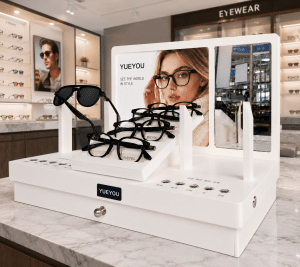
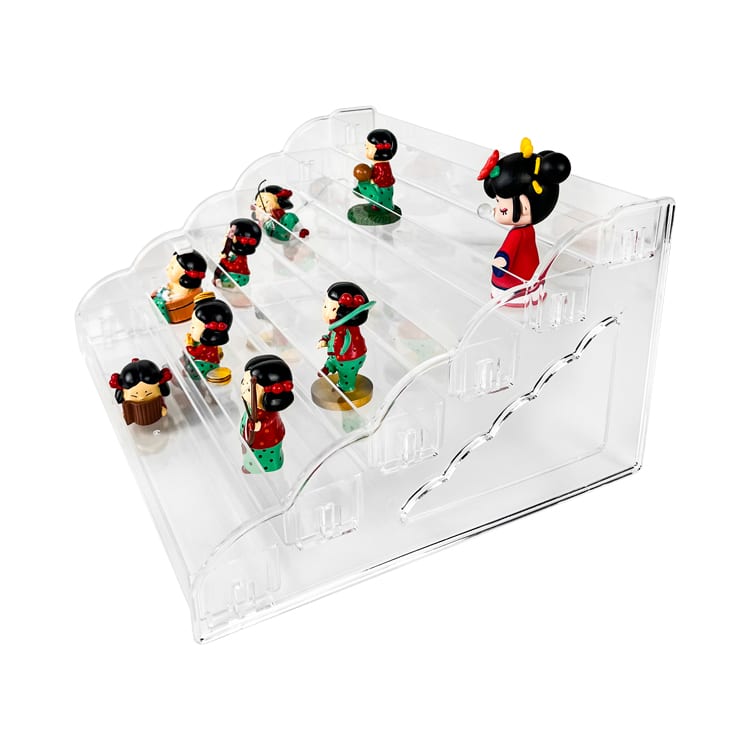
For many modern retail products, acrylic has some clear advantages. It keeps the visual focus on the merchandise, works well with custom shapes and printed graphics, and pairs naturally with LED lighting. It’s especially useful for eyewear, earphones, watches, perfume, cosmetics, and consumer electronics.
Wood, however, has strengths of its own—particularly when natural texture and warmth are part of the brand story.
There’s no need to declare one material the winner before the comparison even starts. What matters is how each material performs for your product, your store environment, and the experience you want to create.
Acrylic vs. Wood Display Stands: A Quick Comparison
Here’s a practical side-by-side look:
Appearance
Acrylic: Clean, polished, contemporary
Wood: Warm, natural, textured
Transparency
Acrylic: Clear, frosted, translucent, colored, or opaque
Wood: Opaque
Product Visibility
Acrylic: Excellent, especially with clear acrylic
Wood: The display remains visually prominent
Customization
Acrylic: Strong flexibility for custom shapes and structures
Wood: Good flexibility, depending on construction
Branding
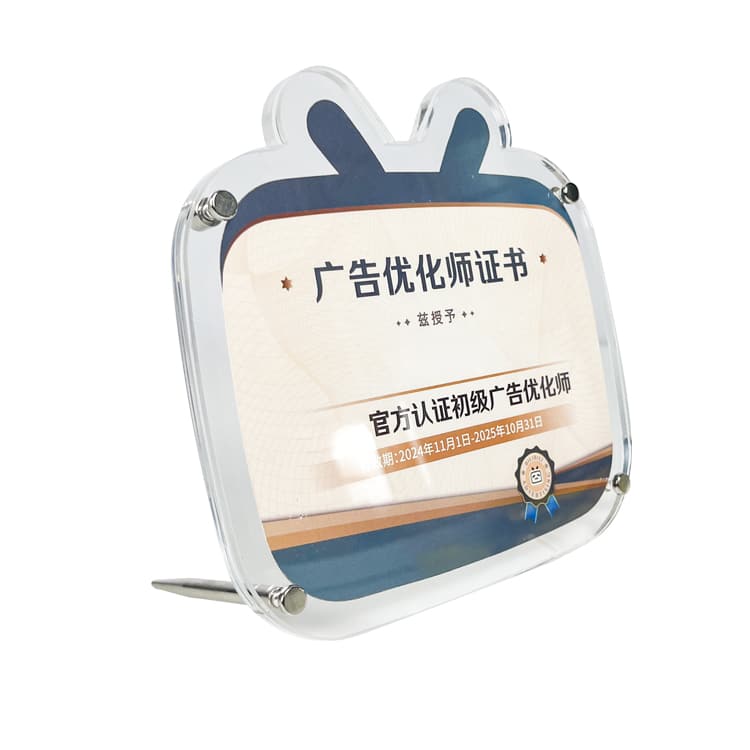
Acrylic: UV printing, screen printing, engraving, graphics
Wood: Printing, engraving, plaques
Lighting
Acrylic: Works especially well with integrated LED lighting
Wood: Lighting can also be incorporated
Maintenance
Acrylic: Smooth surface and relatively easy to clean
Wood: Depends on material and finish
Common Uses
Acrylic: Eyewear, electronics, watches, perfume, cosmetics
Wood: Lifestyle goods, artisan products, natural products
That’s the quick answer. The more useful answer takes a little more thought.
First Impressions: What Is the Display Saying?
Imagine a pair of smart glasses on a clear acrylic stand.
You notice the glasses first. The frame, lenses, shape, and small details remain visible because the holder doesn’t create a heavy visual background.
Now put those same glasses on a solid wood display.
The mood changes immediately. The wood grain becomes part of the presentation. The display feels warmer and more substantial.
Neither presentation is automatically wrong. They simply tell different stories.
That’s one of the biggest differences between acrylic and wood.
Acrylic Keeps the Product in the Spotlight
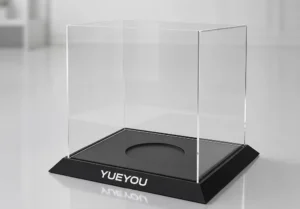
Clear acrylic has an unusual advantage: it can be physically present without looking visually heavy.
That’s valuable in retail.
A display fixture is supposed to support the merchandise, after all—not compete with it.
This is one reason acrylic works particularly well for:
• Eyewear and smart glasses
• Earphones and headphones
• Watches and smart watches
• Perfume
• Cosmetics and skincare
• Jewelry and accessories
• Consumer electronics
And acrylic doesn’t have to mean “completely clear.”
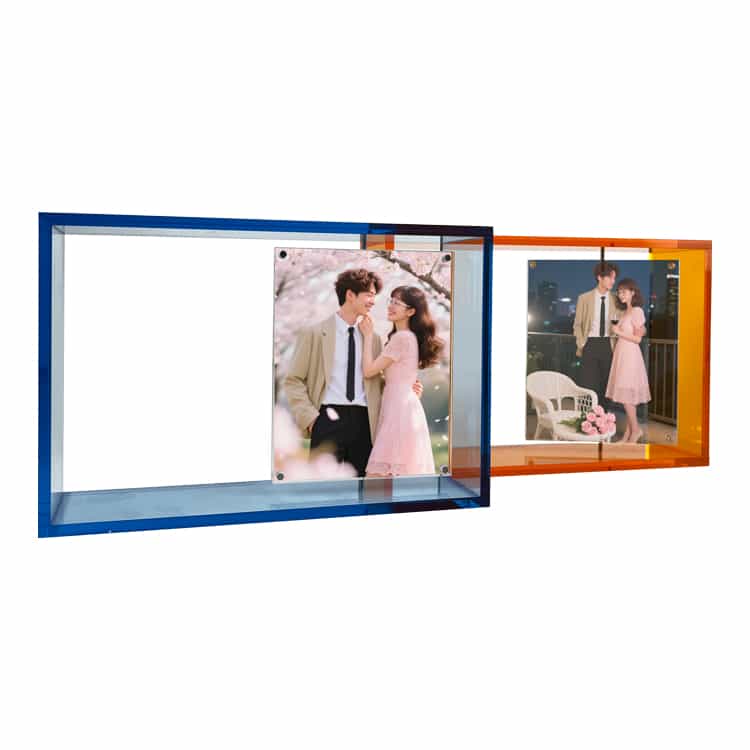
It can be frosted, colored, mirrored, translucent, or opaque. Different finishes can produce very different results while keeping the crisp edges and precise appearance associated with acrylic fabrication.
Wood Makes the Fixture Part of the Story
Wood takes almost the opposite approach.
It doesn’t disappear.
Its grain, color, texture, and finish become part of what shoppers see. For some brands, that’s exactly the point.
Wood can work particularly well for natural skincare, artisan products, home goods, specialty foods, and brands built around craftsmanship or an organic aesthetic.
Think of it this way: acrylic often frames the product by visually stepping back; wood frames the product by visually joining it.
That distinction is small, but it can completely change the feel of a retail display.
Product Visibility: Where Acrylic Really Stands Out
If product visibility is high on your priority list, acrylic deserves serious attention.
Clear acrylic allows shoppers to see through the display structure. That reduces visual obstruction around the merchandise and can make the whole presentation feel more open.
Eyewear is a good example.
Customers want to see the frame shape, temples, lenses, colors, and small design details. An opaque holder can cover some of those features. A properly designed clear acrylic holder provides support while staying relatively quiet in the background.
Perfume is another interesting case.
The bottle itself often does a lot of the selling. Colored glass, reflective caps, unusual shapes, labels, and even the liquid inside the bottle may be part of the visual experience.
Why hide those details behind a bulky fixture?
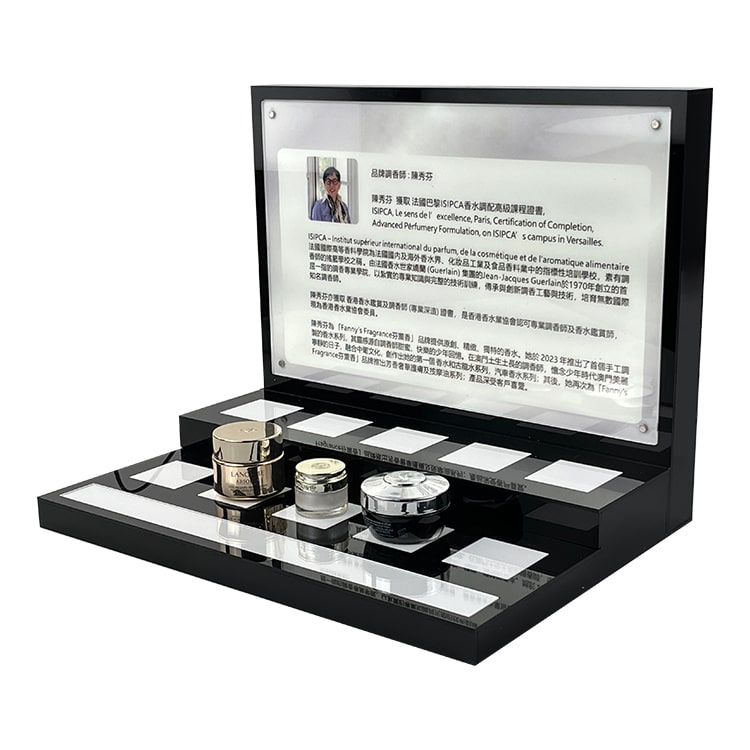
A transparent acrylic platform can elevate the bottle while allowing light and surrounding colors to remain visible.
Wood can create a beautiful presentation too, but it will always have a stronger visual presence.
So ask yourself:
Should shoppers notice the display material—or should they notice the product first?
For many electronics, beauty, eyewear, and accessory displays, that question naturally favors acrylic.
Customization: Acrylic Gives Designers Plenty to Work With
Retail displays rarely just “hold something.”
A real display may need to support several products, organize different SKUs, carry a logo, incorporate product information, hide cables, add lighting, or hold merchandise at a precise viewing angle.
Acrylic is well suited to this kind of custom work.
Depending on the design, acrylic can be:
• Cut
• CNC machined
• Drilled
• Bent
• Bonded
• Polished
• Engraved
• Printed
• Combined with lighting or other materials
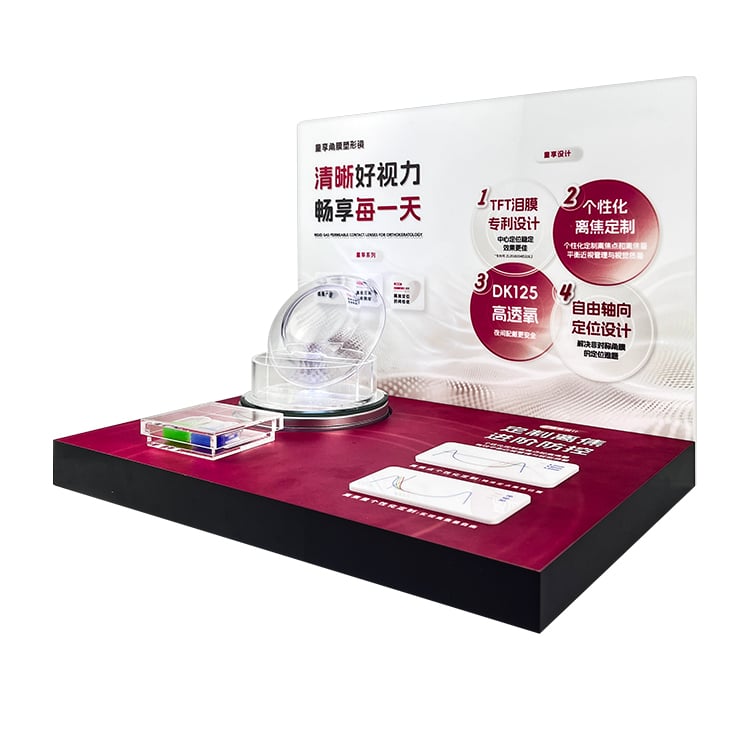
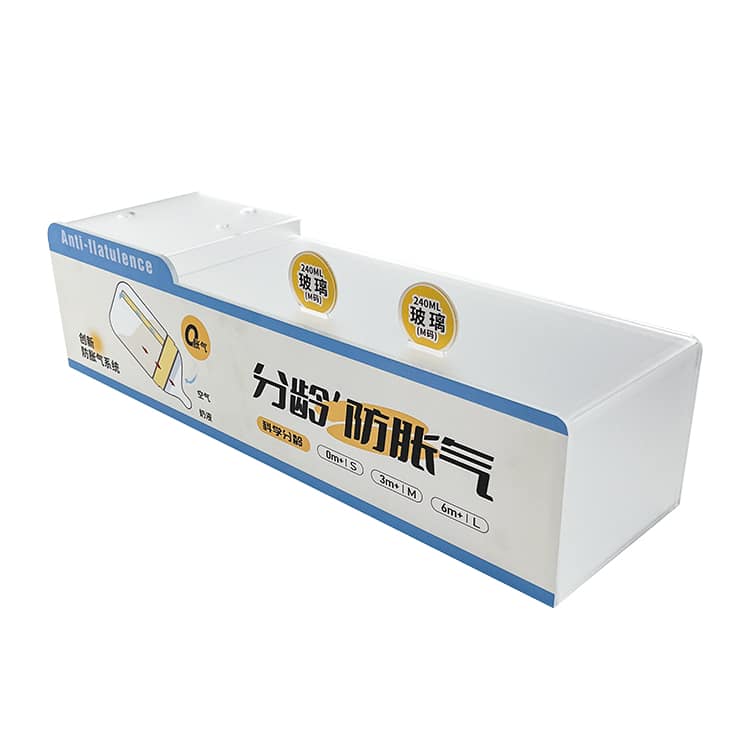
That makes it possible to create product-specific holders, tiered platforms, substantial bases, logo panels, graphic areas, cable openings, and multi-product displays.
Wood is highly workable too. It can be cut, routed, engraved, painted, stained, printed, and combined with other materials.
The biggest difference appears when the design needs transparency and precision at the same time.
Wood can create warmth that acrylic can’t naturally reproduce. Acrylic, however, can create clear structures and floating visual effects that wood simply can’t provide.
UV Printing or Screen Printing? Branding Matters Too
A logo may occupy only a small area of a display, but its placement and finish can affect how professional the entire fixture feels.
Two common methods for adding branding to acrylic are UV printing and screen printing.
UV printing can be useful for detailed graphics, multiple colors, and more complex artwork. Screen printing is often suitable for certain logos, solid colors, and repeat production.
Which one makes more sense depends on the artwork, number of colors, quantity, acrylic surface, and desired finish.
The important part is to consider branding early.
A logo shouldn’t look like someone remembered it five minutes before production.
Its size, position, color, viewing distance, and relationship with the merchandise should all feel intentional.
Acrylic offers a clean surface for this kind of graphic work, which is another reason it appears so often in branded retail displays.
LED Lighting and Acrylic Make a Natural Pair
Lighting is one area where acrylic becomes particularly interesting.
Clear and translucent acrylic can interact with LED light in ways opaque materials can’t. Depending on the structure, lighting can highlight edges, illuminate logos, create a glow beneath a product, or simply help merchandise stand out in a busy retail environment.
This can work especially well for:
• Perfume displays
• Smart watch displays
• Earphone displays
• Smart glasses displays
• Cosmetic displays
• Premium electronics
But here’s the catch: more light isn’t always better.
A retail display isn’t a Christmas tree.
If shoppers notice the LEDs before they notice the product, the lighting may be doing too much.
Good lighting supports the merchandise.
There are practical considerations as well. An illuminated display may need room for wiring, connectors, switches, power components, and cable exits. Those details should be considered while the display is being designed—not squeezed in later.
When lighting is part of the concept from the beginning, acrylic offers a lot of creative freedom.
Is Thicker Acrylic Always Better?
Not necessarily.
It’s easy to assume that thicker acrylic automatically means better quality. In practice, thickness should match the structure and purpose of the display.
For example, 20 mm acrylic can work well for substantial bases or structural elements where the design calls for rigidity and visual weight.
A thick clear base can look surprisingly premium. It catches light, feels solid, and gives a small product more presence.
But that doesn’t mean every component needs to be 20 mm thick.
The appropriate acrylic thickness depends on several factors:
• Product weight
• Display dimensions
• Structural design
• Load requirements
• Joint locations
• Desired visual effect
• Shipping weight
• Material cost
Using unnecessarily thick material can add weight and cost without improving the display. Go too thin, however, and a component may flex or simply feel wrong for the product.
There’s no magic number.
The thickness should follow the design.
Durability: Acrylic and Wood Fail Differently
Which lasts longer, acrylic or wood?
It sounds like a simple question. It isn’t.
Both materials can provide a long service life when the display is properly designed, manufactured, handled, and maintained.
Acrylic can scratch if it is cleaned with abrasive materials. Poorly designed stress points can also create weak areas.
Wood has different concerns. Surfaces may scratch or chip depending on the finish, and certain wood-based materials can be more sensitive to moisture and environmental conditions.
A better question is:
What will this display actually go through?
A perfume stand sitting in a boutique for two years faces a very different life from hundreds of earphone displays being packed, shipped, unpacked, assembled, cleaned, and moved around during a nationwide promotion.
Durability isn’t just a material property.
Structure, handling, maintenance, and environment matter too.
Cleaning: Not Glamorous, but Retail Is Real Life
Retail displays get touched. A lot.
Dust settles. Fingerprints appear. Perfume gets sprayed nearby. Cosmetic testers spill. Store employees clean fixtures quickly between customers.
Acrylic has a smooth, non-porous surface, so routine cleaning is generally straightforward. A soft cloth and a suitable cleaner are important because rough or abrasive materials can scratch the surface.
Wood depends much more on its finish.
A sealed wooden surface may be easy to maintain, while unfinished or highly textured wood can require more care.
This matters particularly in beauty, perfume, and electronics retail, where customers tend to notice smudges and dust against carefully presented products.
A display that looks great on launch day is nice.
One that still looks good months later is much more useful.
Shipping Costs: The Part Everyone Notices Eventually
Display design meetings tend to focus on shape, color, graphics, and lighting.
Then somebody sees the freight quote.
Packaging and shipping suddenly become very interesting.
Acrylic displays can often be designed with relatively low visual and physical bulk, although actual weight depends on material thickness and construction. Wood fixtures may be heavier depending on the material used.
For ten displays, the difference may not be dramatic.
For 500 or 1,000 units moving across the country—or across an ocean—it can matter quite a bit.
When comparing acrylic and wood, look beyond the unit price and consider:
• Display weight
• Carton dimensions
• Units per carton
• Protective packaging
• Assembly requirements
• Shipping volume
• Risk of transit damage
The cheapest fixture on a quotation isn’t always the least expensive fixture once logistics are included.
Acrylic vs. Wood for Earphone Displays
For earphones and headphones, acrylic is often the more natural fit.
Consumer electronics usually have clean surfaces, precise shapes, compact proportions, and a modern visual language. Acrylic complements that look without adding much visual clutter.
It also works well when the display needs product-specific holders, printed graphics, cable openings, lighting, or several product positions.
Wood can still make sense for audio brands that want a warmer, more lifestyle-focused presentation.
But if the goal is a crisp, contemporary electronics display, acrylic usually has the stronger visual advantage.

Acrylic vs. Wood for Eyewear Displays
When comparing acrylic vs wood display stands for eyewear, product visibility should be one of the first considerations.
A shopper wants to see the frame, lenses, temples, colors, and silhouette. Clear acrylic supports the product without covering much of it, which makes it particularly useful for modern eyewear and smart glasses.
Wood creates a stronger visual backdrop and can be a good match for handmade, outdoor, heritage, or nature-inspired eyewear brands.
Think about a futuristic pair of smart glasses and a handmade optical frame.
Would you display them exactly the same way?
Probably not.
The fixture should reinforce what makes the product distinctive.
Acrylic vs. Wood for Perfume Displays
Perfume is a little different because the package itself is often a major part of the product experience.
A fragrance bottle might feature colored glass, a metallic cap, unusual geometry, embossing, or a carefully designed label.
Clear acrylic gives those details room to breathe.
It can also work particularly well with lighting. A subtle LED glow beneath or behind a bottle can emphasize transparent surfaces, edges, and reflections without creating a visually heavy fixture.
Wood creates a warmer and more tactile atmosphere.
For fragrances built around botanical ingredients, woody notes, craftsmanship, or natural positioning, that can be a great match.
When comparing acrylic vs wood display stands for perfume, the choice often comes down to whether the brand wants a clean, modern presentation or a warmer, more sensory atmosphere.So this decision isn’t only technical.
Ask what the shopper should feel.
Clean and polished? Warm and sensory?
The material should support that answer.
Acrylic vs. Wood for Watch Displays
Watches need a display that feels stable and intentional.
Clear acrylic can keep attention on the watch while a thicker acrylic base adds visual substance. This balance—light visually, solid physically—is one of acrylic’s more useful qualities.
For smart watches, acrylic also fits naturally with a contemporary technology aesthetic.
Wood can work beautifully for classic or heritage-inspired watches, where warmth and craftsmanship are part of the story.
For a sleek smart watch or wearable device, however, acrylic often feels more at home.
Is Acrylic Cheaper Than Wood?
Sometimes. Sometimes not.
There is no reliable one-size-fits-all answer because custom display pricing depends on the actual specification.
For acrylic, cost can be affected by:
• Material thickness
• Dimensions
• Number of components
• Cutting and CNC machining
• Polishing
• Bending
• Printing
• LED components
• Assembly
• Packaging
• Quantity
Wood has its own cost variables, including material type, machining, finishing, painting or staining, hardware, labor, and packaging.
Asking whether acrylic is cheaper than wood without seeing the design is a little like asking whether a car costs more than a motorcycle.
Which car? Which motorcycle?
For a retail program, total project cost is usually more useful than raw material price. Manufacturing, packaging, freight, installation, maintenance, and expected service life all matter.
What About Sustainability?
Sustainability deserves more than a green icon and a vague claim.
Wood can come from renewable sources, but its environmental impact depends on material origin, forestry practices, processing, finishes, transportation, lifespan, and disposal.
Acrylic has a different environmental profile. Its impact also depends on material sourcing, manufacturing, how long the fixture stays in use, whether it can be reused, and what recycling or recovery options are available locally.
Instead of assuming one material is automatically “green,” ask more practical questions:
• How long will the display stay in service?
• Can it be reused for future campaigns?
• Can graphics be changed without replacing the whole fixture?
• Can components be separated at the end of use?
• Can packaging volume be reduced?
• What recycling options exist in the destination market?
A display used repeatedly for several years tells a different environmental story from one discarded after a short promotion.
What If You Like Acrylic and Wood?
Use both.
There’s no rule saying a retail display has to swear loyalty to one material.
A wooden base can provide warmth while clear acrylic holders keep products visible. Acrylic graphic panels can add a cleaner branded area to a wood structure. Metal components can be introduced where extra structural support or a different finish is needed.
Mixed-material displays are useful when a brand wants qualities that seem contradictory:
Warm but modern. Natural but precise. Substantial but visually light.
Sometimes the most interesting answer isn’t acrylic or wood.
It’s acrylic and wood.
So, Which Material Is Better for Your Brand?
When comparing acrylic vs wood display stands, the better choice depends on your products, brand identity, retail environment, and the experience you want to create.If your priority is product visibility, a clean contemporary appearance, precise custom holders, printed graphics, or integrated LED lighting, acrylic usually has the stronger case.
It is particularly well suited to:
• Earphones and headphones
• Smart glasses and eyewear
• Smart watches and watches
• Perfume
• Cosmetics
• Consumer electronics
• Jewelry and accessories
Wood deserves consideration when natural texture, warmth, craftsmanship, or heritage are central to the product story.
The important thing is not to choose a material simply because it looks good in isolation.
Put the product first.
Think about what shoppers should notice. Consider how the fixture will be cleaned, packed, shipped, and used. Decide whether the display should visually step back or become part of the brand experience.
For many modern retail products, acrylic’s biggest strength is surprisingly simple:
It does a lot without looking like it’s doing too much.
And in a crowded retail environment, that can be a real advantage.
Frequently Asked Questions
Are acrylic display stands better than wood display stands?
It depends on the application. Acrylic generally has an advantage when transparency, product visibility, clean lines, custom graphics, or LED lighting are important. Wood may be more suitable when natural texture, warmth, or a handcrafted appearance is central to the brand.
Which is better for an eyewear display stand, acrylic or wood?
Clear acrylic is often a strong choice for eyewear because it supports the frame while keeping most of the product visible. Wood can work better for eyewear brands with a natural, heritage, outdoor, or handcrafted aesthetic.
Can LED lights be added to an acrylic display stand?
Yes. LED lighting can be incorporated into many acrylic display designs. Wiring, connectors, power components, and lighting positions should be considered during the design stage so they don’t interfere with the appearance or function of the display.
What acrylic thickness is suitable for a retail display stand?
There is no single ideal thickness. The right choice depends on product weight, display dimensions, structure, load requirements, and visual goals. Thick acrylic, such as 20 mm material, can work well for substantial bases or certain structural elements, but it is not necessary for every component.
Can acrylic and wood be combined in a custom retail display?
Yes. Combining acrylic and wood can provide both transparency and natural warmth. A wood base with clear acrylic product holders, for example, can give the display more character while keeping the merchandise clearly visible.