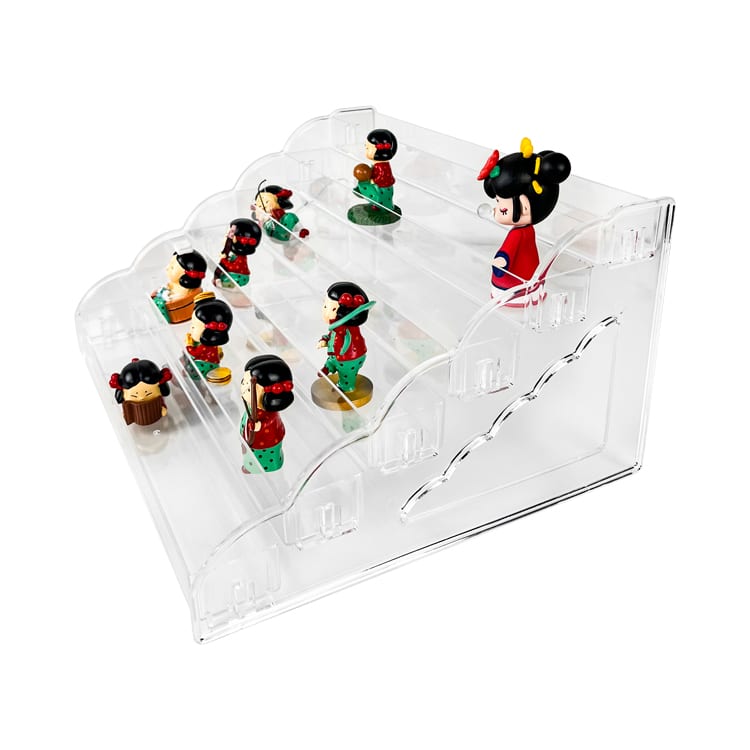
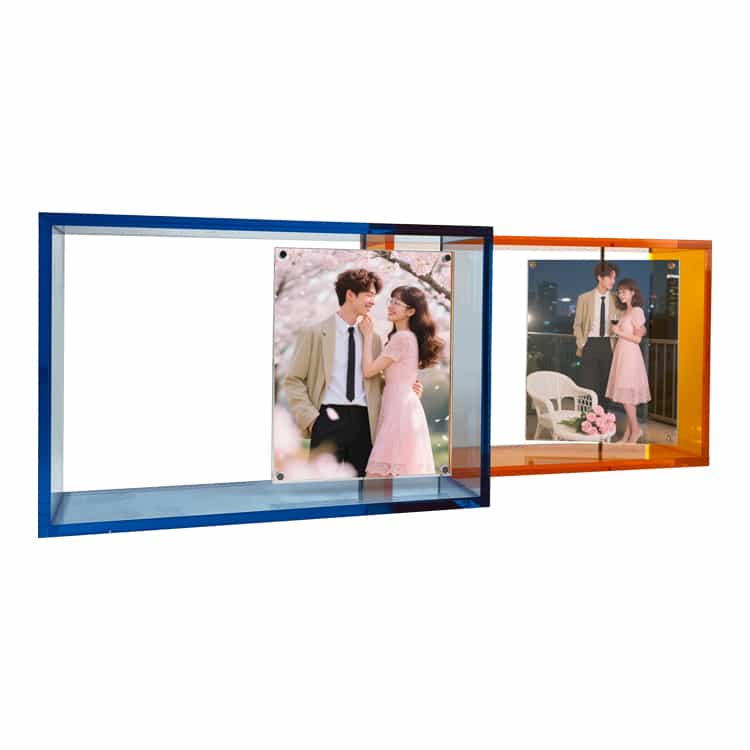
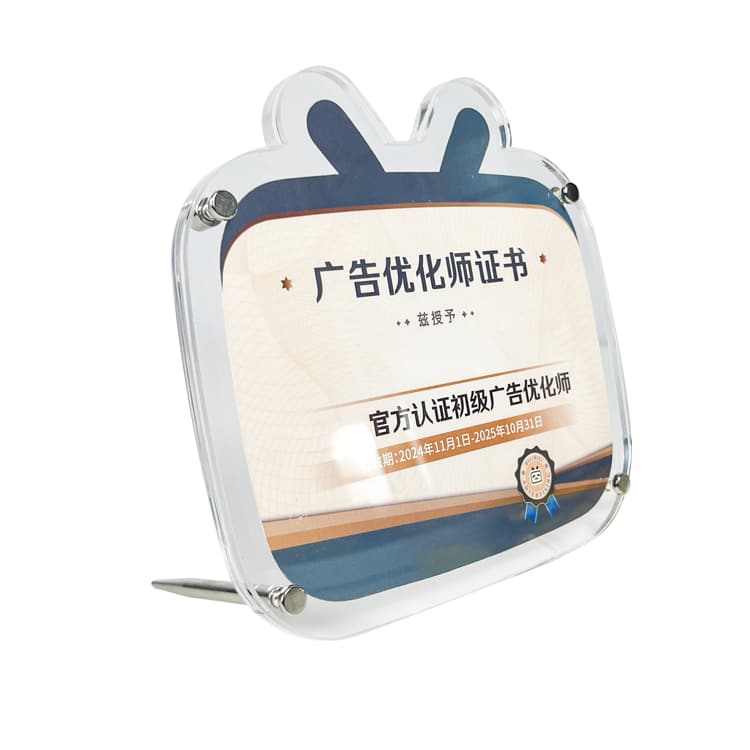
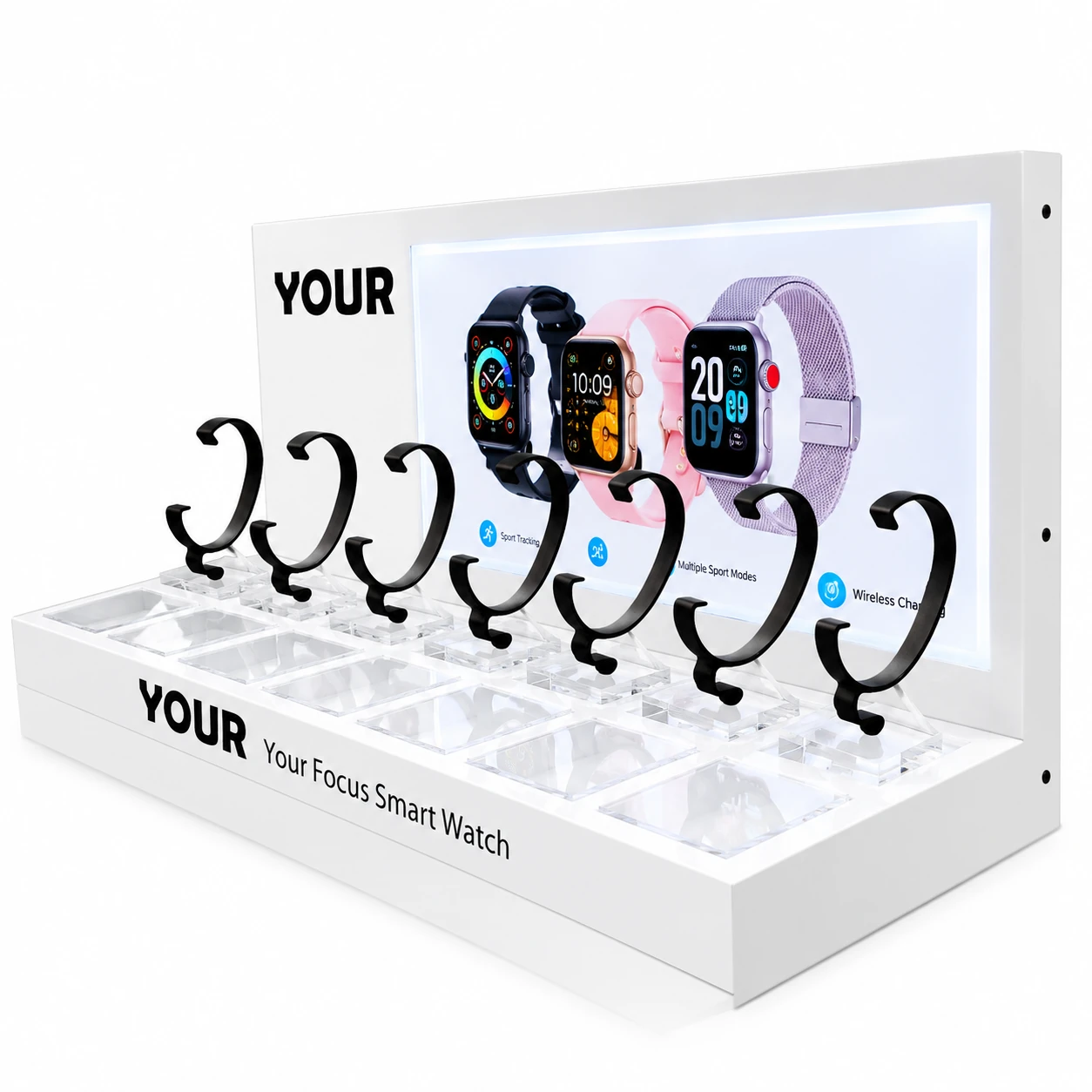
Choosing an acrylic display stand manufacturer may seem simple at first. You send a drawing, get a quote, compare prices, and place an order.
But anyone who has worked on a custom retail display project knows it rarely works that way.
Two acrylic display stands can look almost identical in photos yet feel completely different when you put them on a retail counter. One has smooth, crystal-clear edges and clean joints. The other has visible glue marks, tiny scratches, loose parts, or a base that does not sit quite flat.
And when you are ordering hundreds or even thousands of units, those little differences suddenly become very big differences.
A display stand is not just a piece of acrylic holding a product. It becomes part of your brand presentation. Whether you sell cosmetics, perfume, smart watches, earphones, eyewear, or consumer electronics, the display affects how shoppers see the product sitting on it.
So, how do you find a reliable acrylic display stand manufacturer?
Price matters, of course. But it should never be the only factor.
Here are 10 things worth checking before you place your next custom display order.
1. Check Their Experience With Acrylic Display Stands
Start with a basic question: does the manufacturer actually have experience making retail displays?
This sounds obvious, but it matters.
A factory may be good at making acrylic boxes, signs, trays, or household products. That does not automatically mean it understands retail display stands.
Retail displays have different requirements.
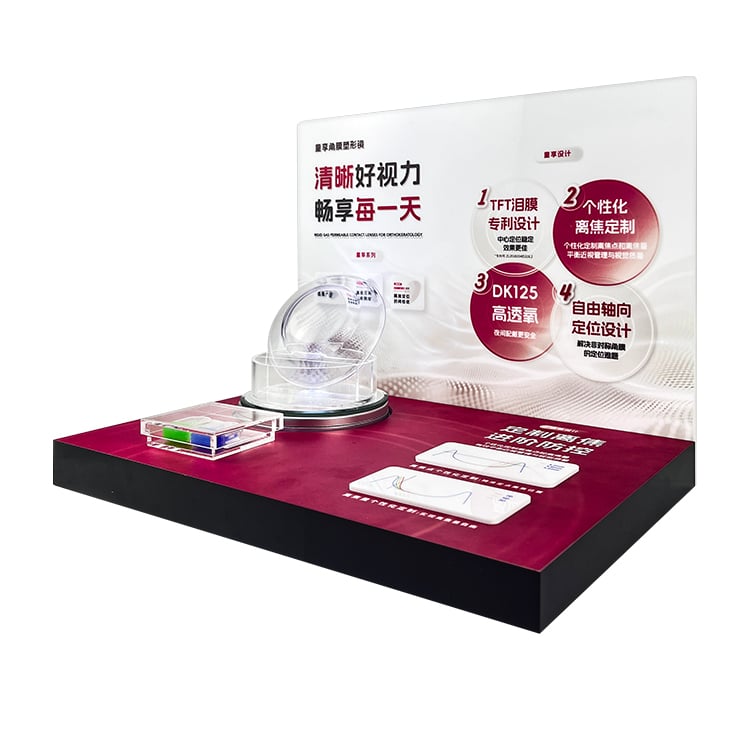
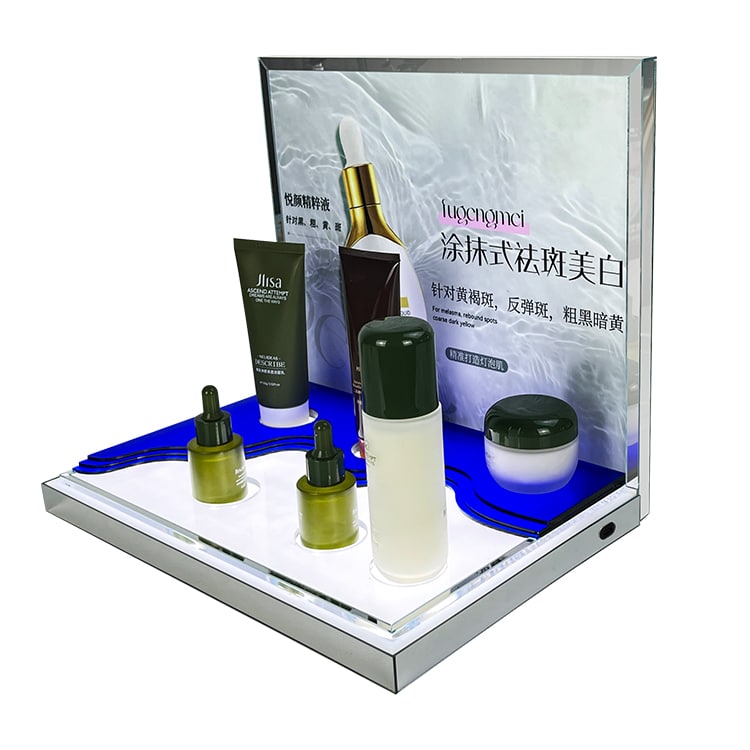
They may need to hold products at a specific angle, accommodate several SKUs, carry printed graphics, hide cables, integrate LED lighting, or allow shoppers to pick up and test a product.
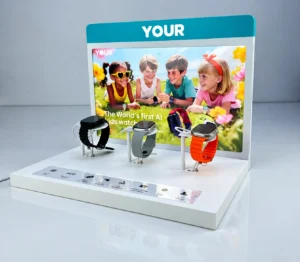
A perfume display has different needs from an earphone display. A cosmetic tester unit has little in common with a simple brochure holder. A smart watch display may need charging access and cable management.
That is why relevant experience counts.
Ask the manufacturer what kinds of displays it has produced before. Look for experience with products similar to yours, especially if your project involves unusual shapes, electronics, lighting, moving parts, or several materials.
A manufacturer with relevant experience can often notice problems before production starts.
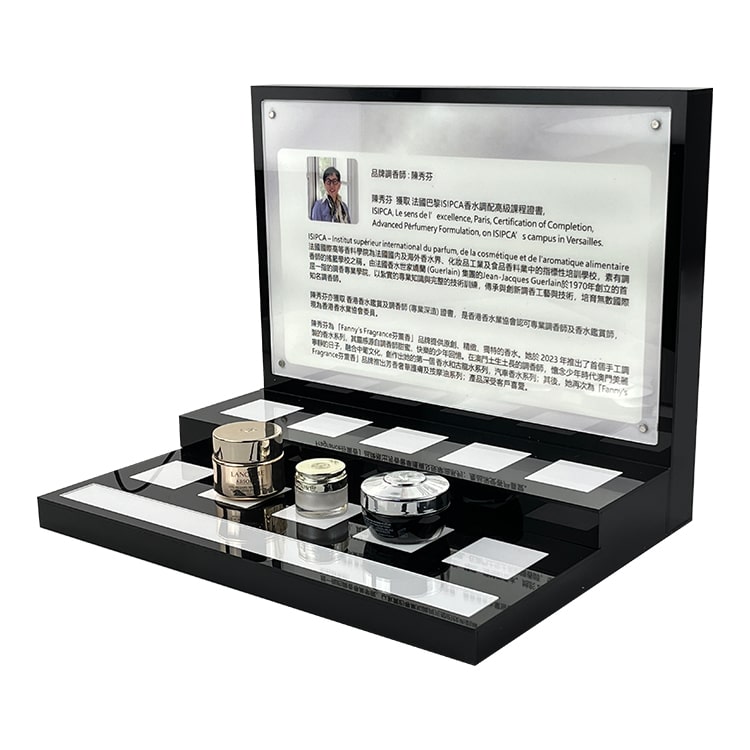
For example, a shelf may look elegant in a drawing but bend slightly once several heavy perfume bottles are placed on it. A display may look compact from the front but require an oversized shipping carton because of its structure.
These details are easy to miss during the early design stage.
An experienced manufacturer should help you catch them.
2. Pay Attention to Acrylic Material Quality
Here’s something many first-time buyers overlook: acrylic is not just acrylic.
Material quality matters.
The quality and thickness of the acrylic sheet can affect transparency, strength, surface appearance, machining, polishing, and the overall feel of the finished display.
For a small countertop display, a thinner sheet may work perfectly well. For a large multi-tier cosmetic display carrying glass bottles, more structural support may be needed.
So don’t simply ask, “How thick is the acrylic?”
Ask why that thickness is being recommended.
A reliable manufacturer should consider the size of the display, product weight, structure, intended use, and visual effect before recommending material.
Appearance matters too.
Clear acrylic creates a clean and almost weightless look, which is one reason it works so well for beauty products, electronics, eyewear, and other retail goods.
But clear isn’t your only option.
Depending on the project, you may use black acrylic, white acrylic, frosted finishes, colored panels, mirrored surfaces, or combine acrylic with other materials. If you’re comparing different material options, our acrylic vs. wood display stands guide explains how each material affects appearance, branding, and retail presentation.
The important thing is that the material supports your product and brand.
Think of the display as a stage. The stage should make the performer look better—not compete for attention.
3. Examine Cutting, Polishing, Bonding, and Finishing
This is where manufacturing quality becomes visible.
Clear acrylic is surprisingly unforgiving. A rough edge, scratch, cloudy surface, or messy joint can stand out immediately.
Good finishing, by contrast, often goes unnoticed.

And that’s exactly the point.
Look carefully at the manufacturer’s previous work or prototype samples. Don’t judge only from attractive wide-angle photos. Close-up details tell you much more.
Check the edges. Are they smooth and clear?
Look at bonded areas. Are the joints clean, or can you see obvious adhesive marks and bubbles?
Check bent parts. Are the angles consistent?
Place the display on a flat surface. Does it sit firmly without rocking?
If the display includes printed graphics, examine those as well. Small text should remain readable, logos should look sharp, and the printing should suit the approved artwork.
Other details worth checking include holes, slots, product holders, removable parts, and connections between different materials.
Why care so much about a few small marks?
Because shoppers notice quality even when they cannot explain exactly what they are noticing.
Put an expensive perfume bottle on a poorly finished stand and something feels off. Put the same bottle on a clean, polished display and the entire presentation feels more considered.
Small details carry more weight than their size suggests.
4. Find Out What “Custom” Really Means
Almost every supplier uses the word “custom.”
But custom can mean very different things.
For some manufacturers, customization means printing your logo on an existing design. For others, it means developing a new display around your product, brand, retail environment, and campaign requirements.
Before choosing a manufacturer, find out how much they can actually customize.
Depending on your project, customization may include:
- Display dimensions
- Acrylic thickness
- Product quantity and layout
- Product holders or cutouts
- Brand colors
- Printed logos and graphics
- Engraving
- LED lighting
- Cable management
- Security features
- Metal or wooden components
- Removable graphics
- Knock-down structures
- Packaging
A good custom display should be designed around the product rather than forcing the product into a standard structure.
Let’s say you’re launching a perfume collection with three bottle sizes. A generic three-tier stand might technically hold them all.
But is “technically” enough?
Perhaps the smallest bottle disappears behind the larger one. Maybe the tester is awkward to reach. Perhaps your key product should sit in the center and slightly higher than the rest.
Those are merchandising decisions as much as manufacturing decisions.
There is another side to this, though: more customization isn’t always better.
Sometimes a simpler design is the smarter design.
Fewer components can mean easier assembly, lower packing volume, easier cleaning, and fewer potential problems during long-term retail use.
A good manufacturer should know when to add something—and when not to.
5. Evaluate Their Design and Engineering Support
Not every buyer comes to a factory with a finished technical drawing.
Sometimes you have a sketch.
Sometimes you have a reference photo and your product dimensions.
And sometimes the brief is basically: “We want something clean, premium, and compact.”
That’s normal.
What matters is what happens next.
A reliable acrylic display stand manufacturer should be able to turn your requirements into a structure that can actually be manufactured.
This may involve adjusting dimensions, selecting material thickness, changing joints, checking tolerances, repositioning graphics, or modifying the structure to make assembly easier.
For electronic displays, the manufacturer may also need to think about charging access, cable routing, security devices, and how customers interact with demo products.
For cosmetics, easy restocking may matter more.
For perfume, bottle weight and tester placement deserve attention.
For eyewear, spacing and viewing angle can make a noticeable difference.
Good design support is not about making everything more complicated. Quite the opposite.
The goal is to make the finished display attractive, practical, stable, and reasonable to produce.
If a supplier simply says “yes” to every request without asking questions, be careful.
Sometimes the most useful thing a manufacturer can say is, “That will work, but here’s a better way to build it.”
6. Request a Prototype for New Custom Designs
A drawing can tell you a lot.
A physical prototype tells you something different.
Once the sample is sitting in front of you, you can place the actual product on it, touch it, move it around, look at it from a customer’s angle, and see whether the proportions feel right.
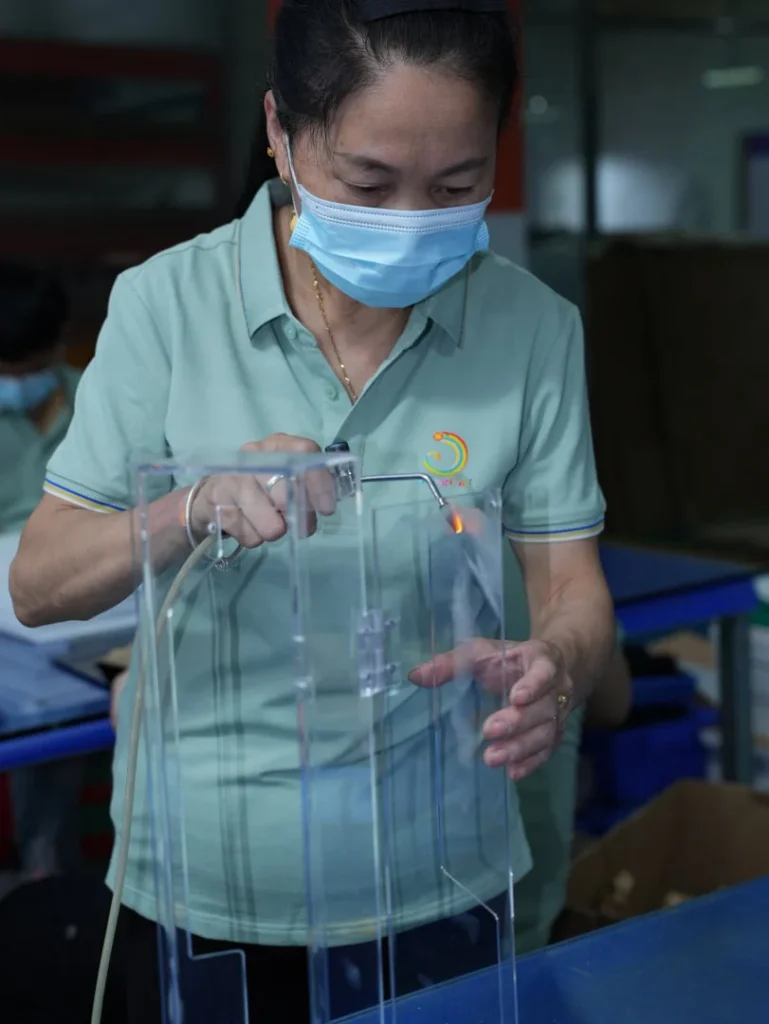
Suddenly, questions become easier to answer.
Is the display stable?
Does the product fit correctly?
Is the logo large enough?
Can customers remove the product comfortably?
Are the graphics easy to read?
Does the display look too tall on the counter?
Can staff refill it without taking half the structure apart?
You know what? Sometimes five minutes with a prototype can reveal something that twenty emails never would.
This is especially important for a completely new custom display.
Before mass production, confirm any changes made after reviewing the sample. Keep the final dimensions, materials, printing details, colors, structure, and other important specifications documented.
A prototype is not merely something nice to look at before production. It is a practical checkpoint.
Use it that way.
7. Ask How Quality Control Works
Every manufacturer says it values quality.
The more useful question is: how is quality checked?
Ask about the actual process.
For example, how are acrylic sheets checked before production? How are important dimensions measured? How does the factory inspect polishing, bonding, printing, and assembly? How are surfaces protected from scratches while the displays move between production stages?
For bulk orders, consistency becomes particularly important.
Making one good prototype is one thing. Producing hundreds or thousands of displays that consistently match the approved sample is another.
That is why your quality requirements should be clear before bulk production begins.
If certain dimensions are critical, identify them.
If a specific brand color matters, make that clear.
If a product must fit tightly into a holder, the relevant tolerance deserves attention.
If the appearance of the front-facing acrylic panel is especially important, tell the supplier.
Quality control becomes much easier when both sides know which details are critical.
Don’t assume. Confirm.
That simple habit can prevent a lot of trouble later.
8. Consider Production Capacity and Lead Time
Fast delivery sounds great.
But an unrealistically fast promise should make you curious, not just happy.
Custom acrylic displays may pass through several production stages, including cutting, machining, bending, bonding, polishing, printing, assembly, inspection, and packaging.
A more complex display may also involve metal parts, magnets, fasteners, LED components, wiring, or other materials.
So ask how the lead time is calculated.
Ideally, your project schedule should consider design confirmation, prototype production, sample review, possible revisions, bulk production, inspection, and packing.
Order quantity matters too.
Producing 100 simple countertop displays is very different from preparing several thousand custom units for a national retail campaign.
If you have a fixed launch date, tell the manufacturer early.
This is especially important for seasonal promotions, trade shows, new product launches, and holiday retail campaigns. Missing the date by a week may matter far more than saving a few days during quotation.
A realistic production schedule may not sound as exciting as “super fast delivery.”
But realistic usually wins.
9. Take Packaging Seriously
A beautiful display that arrives scratched is not a beautiful display.
Packaging deserves attention from the design stage, especially when you are buying clear acrylic products.
Acrylic surfaces need protection from rubbing and movement during transport. Delicate parts may need additional support, while removable components should be packed so they cannot damage one another inside the carton.

The structure of the display also affects shipping.
Some displays can be designed as knock-down units, which may reduce packing volume. Others are better shipped assembled because they are difficult to install correctly at the store.
Neither approach is automatically better.
The right answer depends on your display, quantity, destination, freight method, and retail setup.
There is another detail buyers sometimes forget.
The journey may not end when the shipment reaches your warehouse.
If individual displays will later be sent from a distribution center to hundreds of stores, they may go through another round of handling and transport.
Tell your manufacturer about that distribution process.
Good packaging should protect the display for its real journey—not just the first leg of it.
10. Don’t Underestimate Communication
You can learn a surprising amount about a supplier before the first sample is made.
Pay attention to how they communicate.
Do they ask questions about your product?
Do they notice missing dimensions?
Do they confirm unclear requirements?
Can they explain a technical issue in plain English?
Do their answers become more specific as the project develops?
These things matter because custom display projects involve many small decisions.
A misunderstood measurement, an outdated artwork file, or an assumption about packaging can create problems later.
Good communication reduces those risks.
When requesting a quotation for a custom acrylic display stand, try to provide as much useful information as possible, including:
- Product dimensions and weight
- Product photos
- Number of products displayed
- Preferred display dimensions
- Estimated order quantity
- Material or appearance preferences
- Logo and artwork files
- Special functions or accessories
- Packaging requirements
- Target delivery date
- Reference drawings or images
Don’t have everything ready yet?
That’s okay.
A good supplier should be able to tell you what information is still needed.
The important thing is that each conversation moves the project forward instead of creating more confusion.
Is the Cheapest Acrylic Display Manufacturer Really Cheaper?
Now we come to the part almost every buyer cares about: price.
Yes, price matters.
But a low unit price does not automatically mean a lower total cost.
Imagine Supplier A offers a slightly cheaper display, but the material is thinner, the packaging is basic, and the structure requires more assembly at the store.
Supplier B costs a little more but offers stronger material, safer packaging, and a simpler structure.
Which one is cheaper?
You can’t answer that from the unit price alone.
When comparing quotations from acrylic display manufacturers, make sure you are comparing similar specifications.
Check the material thickness, dimensions, printing method, accessories, assembly method, packaging, quantity, and other included services.
Also ask whether there are sample fees, setup costs, tooling costs, or other charges related to your particular project.
Then think about risk.
What happens if 500 displays arrive with scratches?
What happens if the product doesn’t fit correctly?
What happens if your retail launch has to wait for replacement parts?
A few cents or dollars saved per unit can disappear remarkably quickly when something goes wrong.
The cheapest quotation is not necessarily bad. And the highest quotation is certainly not automatically the best.
What you want is sensible value.
A Quick Checklist Before Placing Your Acrylic Display Order
Before confirming your order, run through this short checklist:
- Does the manufacturer have relevant retail display experience?
- Have the acrylic type, thickness, and finish been confirmed?
- Are all key dimensions shown clearly on the approved drawing?
- Are logo, graphics, and color requirements documented?
- Has a prototype been approved if the design is new or complex?
- Are critical quality requirements clearly defined?
- Is the production schedule realistic?
- Is the packaging suitable for your shipping and distribution process?
- Does the quotation clearly state what is included?
- Are all final changes recorded before mass production?
It is a simple list, but that’s the point.
A good purchasing process doesn’t have to be complicated. It just needs to catch the important things before they become expensive things.
Final Thoughts: Look Beyond the Quote
Choosing a reliable acrylic display stand manufacturer is really about reducing uncertainty.
Can the supplier make what you designed?
Can they make it well?
Can they make it consistently?
Can they pack it safely and deliver it according to the agreed schedule?
And when something needs to change—as it often does during custom development—can they communicate clearly enough to solve the issue?
Those questions matter far more than a polished sales presentation.
A strong manufacturer should understand both acrylic fabrication and the practical needs of retail display. They should be able to discuss materials, structure, branding, production, quality, packaging, and cost without making the process unnecessarily complicated.
After all, your display has a fairly simple mission.
It needs to hold the product properly, present your brand well, survive daily retail use, and help the merchandise catch a shopper’s eye.
If you’re preparing a custom acrylic display project, start by sharing your product dimensions, product photos, required quantity, logo artwork, preferred display style, and target delivery date. The clearer the initial information is, the easier it becomes to develop an accurate design and quotation.
Frequently Asked Questions
How do I choose a reliable acrylic display stand manufacturer?
Look for relevant retail display experience, good acrylic fabrication quality, custom design support, clear quality control procedures, realistic production schedules, suitable packaging, and responsive communication. For a new custom design, asking for a prototype before bulk production can also help reduce purchasing risk.
What information do I need for a custom acrylic display stand quotation?
Provide your product dimensions, product photos, estimated order quantity, required display size, number of products to be displayed, logo or artwork files, preferred colors and materials, special features, packaging requirements, and target delivery date. Reference images or sketches can also help the manufacturer understand your idea.
Should I order an acrylic display stand sample before mass production?
For a new or complex custom acrylic display stand, a physical prototype is usually helpful. It allows you to check dimensions, product fit, stability, printing, finishing, usability, and overall appearance before approving bulk production.
What affects the cost of custom acrylic display stands?
The price can be affected by display size, acrylic thickness, structure, order quantity, cutting and fabrication requirements, printing, accessories, mixed materials, lighting, assembly, and packaging. Buyers should compare quotations based on the same specifications rather than unit price alone.
What should I check when sourcing custom acrylic display stands from China?
When sourcing custom acrylic display stands from China, check the manufacturer’s relevant experience, material specifications, fabrication quality, prototyping process, quality control, production capacity, lead time, packaging, export experience, and communication. Confirm final drawings and specifications before mass production.