
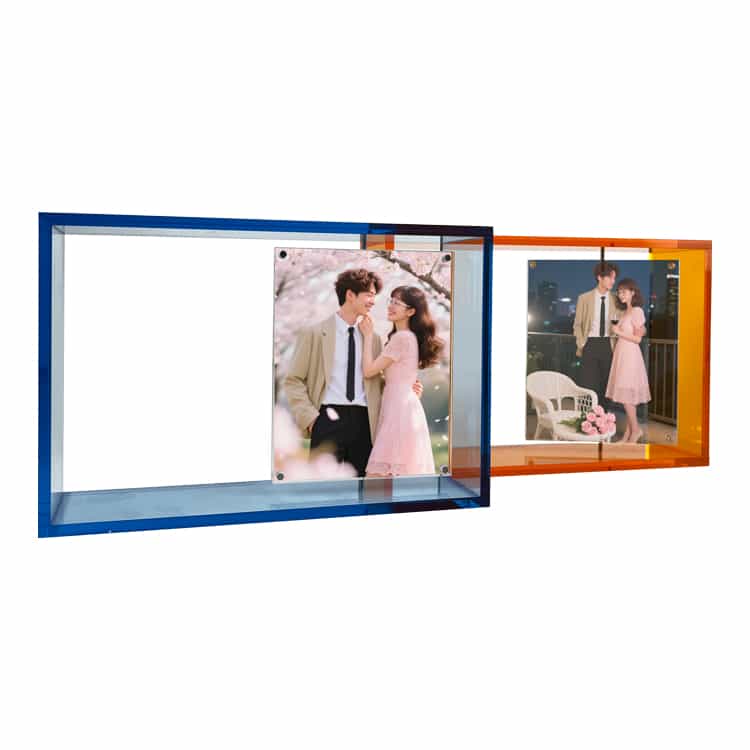
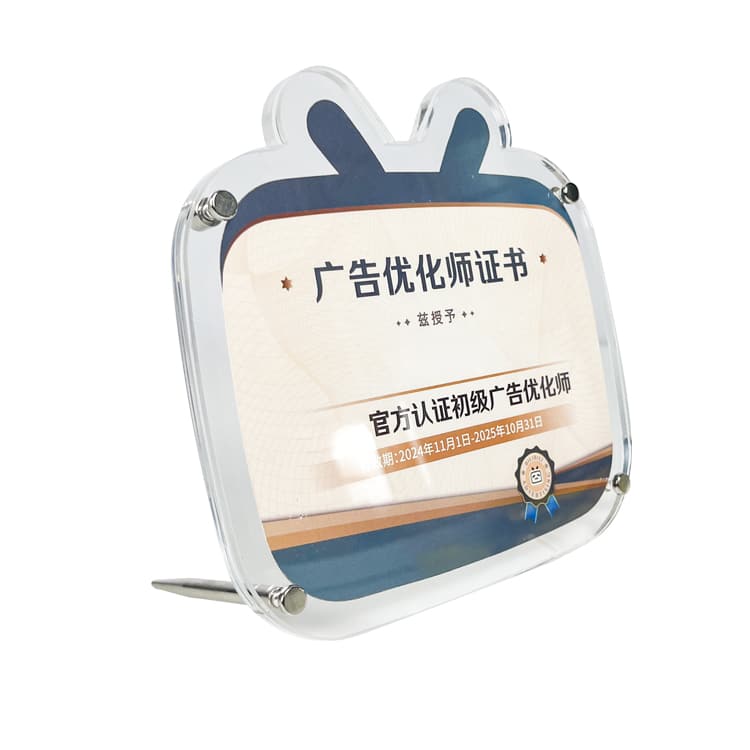
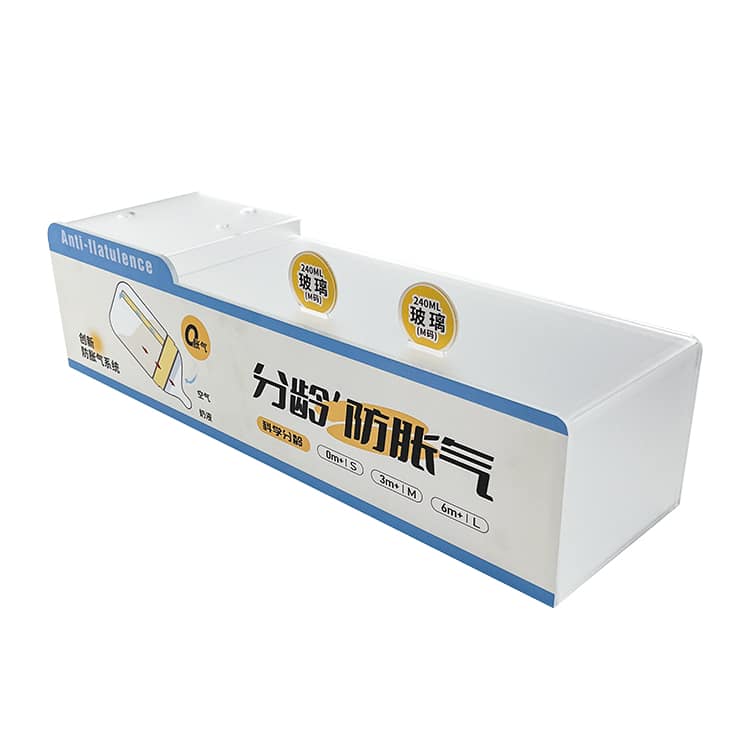
Choosing the right acrylic box is about more than finding a transparent container that looks attractive. The box should fit the product properly, protect it during use, support an effective presentation, and match the available retail, storage, or exhibition space.
Because products vary in shape, weight, and display requirements, there is no single universal acrylic box size. A jewelry box, cosmetic display case, collectible enclosure, and retail protection cover may all require different dimensions and structures.
This guide explains how to choose acrylic box dimensions, calculate internal clearance, select a suitable acrylic thickness, compare transparent materials, and prepare the information needed for a custom quotation.
Is There a Standard Acrylic Box Size?
There is no globally fixed standard size for acrylic boxes. Most boxes are manufactured according to the dimensions of the product they will hold and the way the box will be used.
The following dimensions can be used as general starting points:
| Application | Typical Internal Size |
|---|---|
| Small jewelry or accessory box | 80 × 80 × 50 mm to 150 × 150 × 100 mm |
| Cosmetic or perfume display | 150 × 100 × 200 mm to 300 × 200 × 300 mm |
| Countertop product display | 250 × 200 × 150 mm to 500 × 400 × 300 mm |
| Collectible display case | 200 × 200 × 200 mm to 600 × 400 × 400 mm |
| Retail protection cover | Based on the product and display fixture |
| Exhibition enclosure | Custom-designed according to the product and venue |
These measurements are reference ranges rather than fixed production standards. The final dimensions should be confirmed after reviewing the product, available installation space, required clearance, and display method.
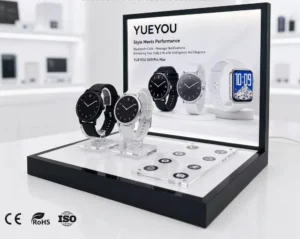
For more product-display applications, see YueYou’s acrylic display products for watches, eyewear, perfume, and Bluetooth headsets.
What Is Acrylic and Why Is It Used for Display Boxes?
Acrylic, also known as polymethyl methacrylate or PMMA, is a transparent thermoplastic used in display products, protective covers, signage, retail fixtures, and exhibition structures.
According to ASTM D4802, Standard Specification for Poly(Methyl Methacrylate) Acrylic Plastic Sheet, acrylic sheet can be evaluated through properties such as optical transmission, haze, tensile strength, impact strength, thermal stability, abrasion resistance, and chemical resistance.
Acrylic is commonly selected for display boxes because it combines:
- A clear and polished appearance
- Relatively low weight
- Flexible fabrication options
- Easy customization
- Compatibility with printing and engraving
- Good suitability for indoor retail applications
Acrylic panels can be cut, polished, bent, bonded, printed, or engraved to create different box styles and display structures.
However, acrylic performance varies according to the sheet grade, thickness, manufacturing process, surface treatment, and application environment. For outdoor, high-temperature, or heavy-load projects, the exact material specification should be confirmed before production.
Internal Dimensions vs. External Dimensions
One of the most important details when ordering an acrylic box is whether the quoted measurements refer to the internal or external dimensions.
Internal dimensions
Internal dimensions describe the usable space inside the box. They determine whether the product will fit properly.
For example, an internal size of 300 × 200 × 150 mm provides approximately:
- 300 mm of internal length
- 200 mm of internal width
- 150 mm of internal height
External dimensions
External dimensions include the acrylic panels and other components, such as:
- Base plates
- Lids
- Hinges
- Magnetic closures
- Feet
- Mounting brackets
- Decorative frames
The external size may therefore be larger than the usable space inside the box.
Before production, confirm the following:
- Are the dimensions internal or external?
- Is the base included?
- Is the lid included?
- Does the height include feet or brackets?
- Are the dimensions listed as length × width × height?
This simple confirmation can prevent fitting problems and unnecessary production revisions.
How to Calculate the Correct Acrylic Box Size
Start by measuring the product at its maximum length, width, and height. If the product has an irregular shape, measure its widest overall profile rather than relying only on the packaging dimensions.
A practical calculation is:
Recommended internal dimension = product dimension + clearance + insert or padding thickness
For a fixed, rigid product, approximately 5–15 mm of clearance per side may be a useful starting point. Additional space may be required for:
- Foam inserts
- Velvet or fabric lining
- Product stands
- Protective packaging
- Labels
- Removable platforms
- Electrical wiring
- Lighting components
For example, if a product measures 180 × 120 × 90 mm and requires 10 mm of free space around each side, the internal box should be larger than 200 × 140 × 110 mm. If an insert is included, the insert thickness must be added separately.
The ideal clearance depends on how the box will be used. A display case that is opened frequently needs more hand clearance than a sealed dust cover.
Recommended Clearance for Different Applications
| Application | General Clearance Guideline |
|---|---|
| Fixed product display without insert | 5–10 mm per side |
| Product with a removable base | 10–20 mm per side |
| Product with foam or fabric lining | Add the insert thickness |
| Frequently handled merchandise | Allow additional hand clearance |
| Fragile products for shipping | Add protective packaging space |
| Irregularly shaped products | Measure the widest overall profile |
These values are general design references. A sample or technical drawing should be reviewed before mass production, particularly for products with unusual shapes or tight tolerances.
How to Choose Acrylic Thickness
Acrylic thickness affects the rigidity, appearance, weight, cost, and durability of the finished box.
ISO 7823-1 covers general-purpose cast PMMA sheets in different types, dimensions, and thicknesses, including sheets from approximately 1.5 mm to 25 mm. This does not mean every acrylic box should use the thickest available sheet. Thickness should be selected according to the box structure and application.
2 mm acrylic
Two-millimeter acrylic may be suitable for small and lightweight products, simple covers, and decorative components.
Typical uses include:
- Small accessory boxes
- Lightweight trays
- Product inserts
- Compact tabletop displays
For larger panels, 2 mm acrylic may flex more easily.
3 mm acrylic
Three-millimeter acrylic is a practical option for many general display applications. It offers a balance between appearance, cost, and structural stability.
It may be suitable for:
- Small and medium product displays
- Cosmetic holders
- Retail counter boxes
- Lightweight collectible cases
5 mm acrylic
Five-millimeter acrylic provides greater stiffness and a more substantial appearance. It is often selected for:
- Medium-sized display cases
- Heavier products
- Premium retail displays
- Wider transparent panels
- Products requiring additional stability
8 mm acrylic and above
Thicker acrylic may be required for large enclosures, heavy products, or designs with wide unsupported panels.
However, increasing the thickness is not always the only solution. Larger boxes may also require:
- Reinforced corners
- A stronger base
- Internal supports
- Metal connectors
- Dividers
- Modular construction
- A different assembly method
The final load capacity depends on the panel span, support points, joint method, product weight, and load distribution. For more information, see this guide to acrylic thickness for display stands.
How Should Acrylic Box Thickness Be Selected?
Acrylic thickness should be selected together with the overall shape and structure of the box.
Important factors include:
- Overall length, width, and height
- Size of each unsupported panel
- Product weight and weight distribution
- Base and support design
- Corner and joint construction
- Whether the box will be frequently moved
- Indoor or outdoor operating conditions
- Whether the box includes a lid, door, slot, or hardware
A thickness value alone does not create a guaranteed load rating. Two boxes made from the same 5 mm acrylic sheet may have very different load capacities if one has a reinforced base and the other has a large unsupported bottom panel.
For heavy products, large display cases, or boxes used during transportation, request a technical review or sample before placing a mass-production order.
Is Acrylic Stronger Than Other Transparent Plastics?
Acrylic should not be compared with “ordinary plastic” as if all plastics have the same characteristics. Transparent materials such as PMMA, polycarbonate, PETG, and polystyrene have different levels of clarity, flexibility, impact resistance, weather resistance, and cost.
ISO 24026-1 explains that PMMA materials can be classified according to characteristics such as Vicat softening temperature and melt mass-flow rate. The standard also indicates that material designation and application performance should not be treated as exactly the same thing.
As a result, two PMMA products with a similar general description may not perform identically in every application. Buyers should request technical information for the specific sheet grade being used.
| Material | Typical Advantage | Important Consideration |
|---|---|---|
| PMMA acrylic | Clear, premium appearance and good fabrication flexibility | Surface can be scratched without proper handling |
| Polycarbonate | High impact resistance | Usually more expensive and may have a different visual finish |
| PET or PETG | Lightweight and suitable for some packaging uses | Rigidity and long-term performance vary by grade |
| Polystyrene | Lower cost for basic applications | More brittle and less suitable for demanding use |
PMMA is often a suitable choice for retail and exhibition displays where appearance, transparency, and customization are important. Polycarbonate may be more appropriate when impact resistance is the main priority.
For a practical comparison, read Are Acrylic Display Stands Better Than Plastic?.
How Clear Is Acrylic?
Clear acrylic is widely used where product visibility is important. Its visual performance may include light transmission, haze, surface finish, color, and edge clarity.
Optical performance should not be reduced to one fixed percentage for every acrylic product. The final result can vary according to:
- Sheet thickness
- Acrylic grade
- Surface treatment
- Color or tint
- Manufacturing quality
- Scratches and polishing
- Measurement method
ASTM D4802 includes optical properties such as luminous transmittance and haze among the characteristics that may be evaluated for acrylic sheet.
For a project that requires a specific transparency level, ask the manufacturer to provide technical data for the actual material being supplied. This is more reliable than assuming that every clear acrylic sheet has exactly the same light-transmission performance.
How Much Weight Can an Acrylic Box Hold?
The load capacity of an acrylic box depends on more than the thickness of the sheet. It is affected by:
- Overall box size
- Panel span
- Support points
- Base design
- Joint method
- Product weight
- Weight distribution
- Frequency of movement
A small acrylic box with a supported base may hold a heavier item than a larger box made from the same thickness of acrylic but with a wide unsupported panel.
Weight figures should therefore be treated as project-specific design information rather than universal ratings.
For products above typical retail-display weight, provide the manufacturer with:
- Product weight
- Product contact area
- Required box dimensions
- Base structure
- Whether the box will remain stationary
- Whether the item will be frequently removed
- Whether the box needs to be shipped
The manufacturer can then recommend the material thickness and reinforcement method. If the box is safety-critical or will carry a valuable product, a prototype or load test should be considered.
How Durable Is an Acrylic Box?
Acrylic can provide good durability for many indoor display applications, but service life depends on the actual use environment.
Factors that may affect durability include:
- Direct sunlight and UV exposure
- Temperature fluctuations
- Cleaning chemicals
- Surface scratching
- Repeated opening and closing
- Impact during transportation
- Joint and hardware quality
- Panel stress caused by an unsuitable design
ISO 24026-2 describes methods for preparing test specimens and determining properties of PMMA molding and extrusion materials. Standardized testing helps characterize the material, but the performance of a finished acrylic box still depends on its design and manufacturing process.
For this reason, it is better to use expressions such as:
- Typical indoor service performance
- Expected durability under normal use
- Estimated service period
- Project-specific durability evaluation
Avoid promising a fixed number of years unless the finished product has been tested under clearly defined conditions.
Common Acrylic Box Configurations
The size of a box is only one part of the design. The opening method, base, and internal organization can significantly affect usability.
Open-top acrylic box
An open-top box is practical when products need to be accessed frequently. It is often used for:
- Retail merchandise
- Product samples
- Promotional products
- Self-service counters
Acrylic box with a lid
A lid helps reduce dust and provides additional protection. Depending on the application, it can be designed as:
- Lift-off
- Hinged
- Sliding
- Magnetic
- Lockable
A lift-off lid is simple and cost-effective, while hinged or magnetic designs may provide a more polished customer experience.
Acrylic box with a base
A base improves stability and creates a more complete presentation. It may be manufactured from:
- Clear acrylic
- Colored acrylic
- Frosted acrylic
- Wood
- Metal
- Printed acrylic
For countertop merchandising, the base can also contain branding, lighting, or product information.
Acrylic box with dividers or slots
Dividers and slots help keep products organized and positioned correctly. This design is suitable for:
- Jewelry
- Watches
- Cosmetics
- Cards
- Small electronics
- Promotional samples
Wall-mounted or hanging acrylic box
Wall-mounted designs need careful consideration of the total load and fixing points. The mounting hardware and support structure should be selected based on the complete product-and-box weight.
Selecting Acrylic Boxes for Retail Counters
A retail countertop display should be large enough to present the product clearly but compact enough to preserve valuable selling space.
Before finalizing the design, consider:
- How many products need to be displayed?
- Should customers be able to touch the products?
- Does the display need a cover or lock?
- How much countertop or shelf space is available?
- Is space needed for labels or printed branding?
- Does the display need to be stackable or modular?
- Will it be shipped to multiple stores?
For cosmetics and beauty products, the display layout is often as important as the box itself. You can find additional ideas in this guide to countertop cosmetic display stand planning.
If the display must fit a small retail counter, this article about cosmetic display rack layouts for small retail counters may also be helpful.
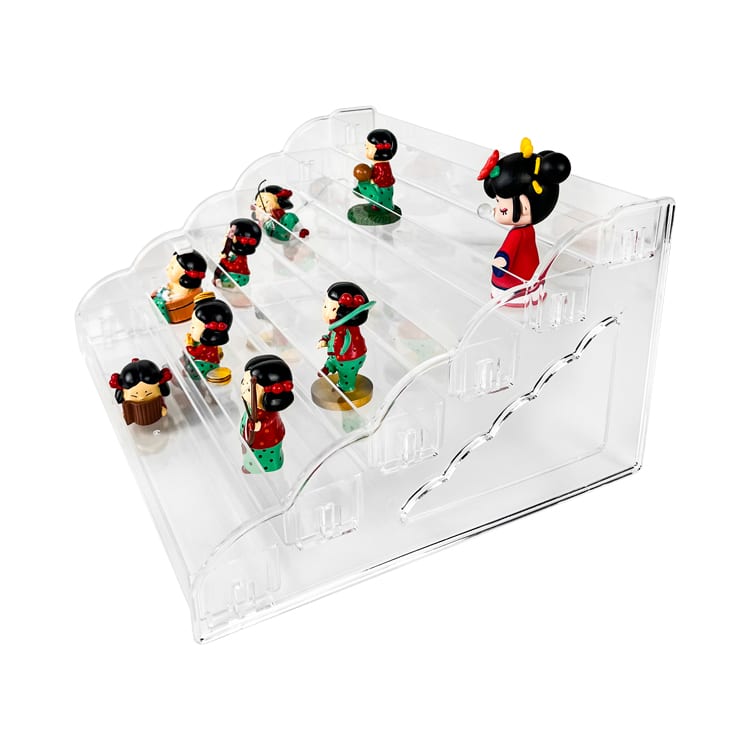
Choosing a Display Case for Collectibles
Collectibles often need protection from dust while remaining visible from multiple viewing angles.
When designing a collectible case, consider:
- The tallest point of the item
- Accessories or detachable parts
- The stability of the display base
- Viewing distance
- Lighting position
- How the item will be removed
- Space for protective packaging
- Risk of scratching or impact
A very tight-fitting case may look compact, but it can make installation and removal difficult. A small amount of additional clearance usually provides a better balance between protection and convenience.
For cards and collectible items, a specialized graded card case may be more suitable than a general-purpose acrylic box.
Acrylic Boxes for Cosmetics and Perfume
Cosmetic and perfume displays usually need to combine product visibility, organization, and brand presentation.
Important factors include:
- Bottle height
- Bottle diameter
- Number of products
- Product arrangement
- Label visibility
- Shelf height
- Logo placement
- Tester accessibility
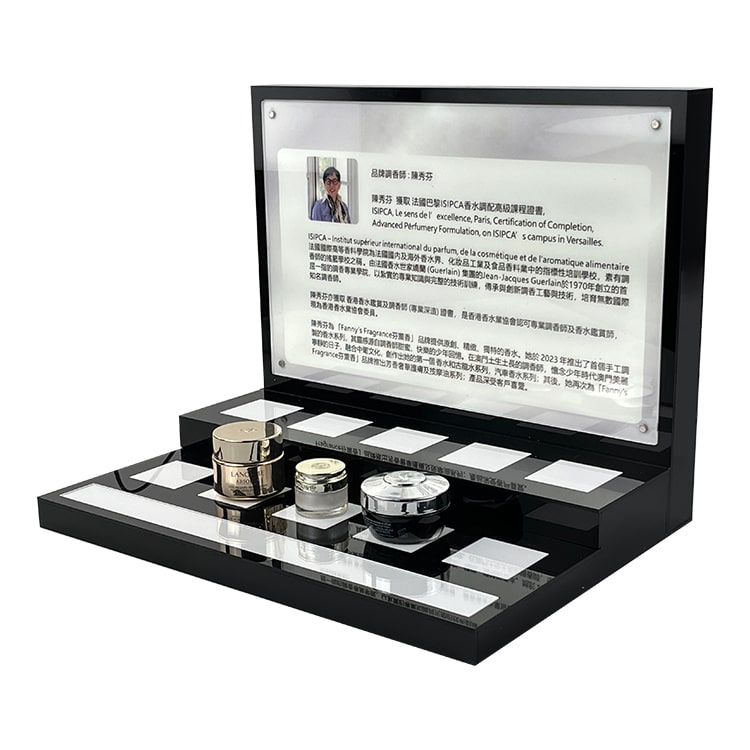
When products have different heights, a stepped display or custom insert may create a clearer visual hierarchy than a flat base.
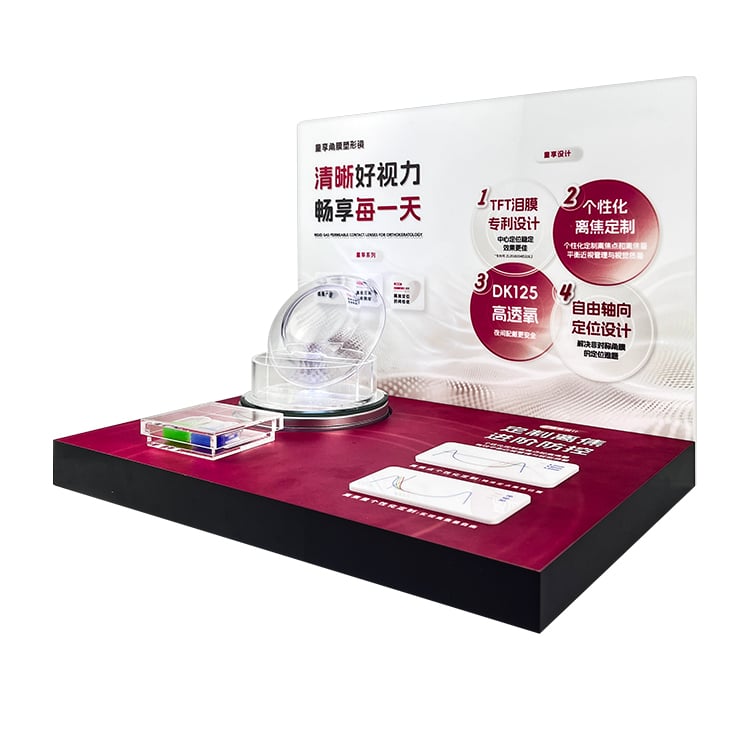
Acrylic can also be combined with:
- UV-printed graphics
- Colored backgrounds
- Mirrored panels
- LED lighting
- Raised logos
- Metal or wooden bases
For application-specific ideas, see YueYou’s custom acrylic cosmetic display rack and perfume display solutions.
When Is a Custom Acrylic Box Better?
A standard-size box may be sufficient for a small, lightweight, regularly shaped product. Custom manufacturing is usually a better option when:
- The product has an unusual shape
- The item must stay in a fixed position
- A logo or printed graphic is required
- The box needs a special opening method
- Several products must be displayed together
- The display must fit a specific shelf or cabinet
- The product is part of a retail campaign
- The design needs to be reproduced in quantity
Custom acrylic boxes can include:
- Precise internal dimensions
- Rounded corners
- Cutouts
- Slots
- Dividers
- Hinges
- Magnetic closures
- UV printing
- Laser engraving
- Frosted or colored panels
- LED lighting
- Acrylic, wood, and metal combinations
For OEM and ODM projects, YueYou also provides custom acrylic display stand solutions.
What Information Should You Send for a Quote?
Complete project information helps a manufacturer recommend the right design and prepare a more accurate quotation.
Include the following details:
- Product name and application
- Product length, width, and height
- Required quantity
- Preferred acrylic color or transparency
- Preferred panel thickness, if known
- Internal or external dimension preference
- Lid, base, insert, or divider requirements
- Logo or printing requirements
- Intended use environment
- Delivery destination
- Target delivery date
- Product photos or technical drawings
If the product has an irregular shape, photographs taken next to a ruler can be useful. A simple sketch showing the required opening, base, and product position can also speed up the design process.
You can submit these details through YueYou’s customization service or contact the company through the contact page.
Frequently Asked Questions
What is the most common acrylic box size?
There is no single most common size because acrylic boxes are used for different products and environments. Small boxes are often used for accessories, while medium and large formats are common for retail displays, collectibles, and exhibition products.
Should acrylic box dimensions be internal or external?
Internal dimensions are usually more important for confirming product fit. External dimensions are needed to check whether the box will fit on a shelf, countertop, cabinet, or shipping carton. Always confirm both when requesting a quotation.
How much clearance should be left around a product?
For a fixed rigid product, 5–15 mm of clearance per side may be a useful starting point. Additional space may be needed for inserts, padding, hand access, irregular shapes, or protective packaging.
What acrylic thickness is best for a display box?
The appropriate thickness depends on the box size, panel span, product weight, support structure, and expected handling. Small displays may use 2–3 mm acrylic, while larger or heavier boxes may require 5 mm, 8 mm, or structural reinforcement.
Can acrylic boxes be made with lids?
Yes. Acrylic boxes can be produced with lift-off, hinged, sliding, magnetic, or lockable lids. The best option depends on how frequently the box will be opened and how much protection is required.
Can an acrylic box include a logo?
Yes. Common branding options include UV printing, laser engraving, vinyl application, screen printing, and printed acrylic panels. The most suitable method depends on the artwork, quantity, durability requirements, and desired appearance.
Is clear acrylic suitable for outdoor use?
Clear acrylic can be used in many outdoor applications, but the complete design must consider UV exposure, temperature changes, wind, moisture, cleaning, and fixing methods. Outdoor projects should be evaluated according to their actual environment.
How can I get an accurate acrylic box quotation?
Send the product dimensions, quantity, intended use, preferred design, and any logo or insert requirements. Product photos, drawings, and delivery information can help the manufacturer provide a more accurate recommendation.
Final Thoughts
The right acrylic box size depends on more than the product’s length, width, and height. Clearance, thickness, opening style, base design, product access, branding, transportation, and installation space all affect the final result.
A standard-size box may be suitable for a simple project. For branded retail displays, cosmetics, collectibles, exhibitions, and protective enclosures, a custom acrylic box can provide a better fit and a more professional presentation.
Before requesting a quotation, prepare the product measurements, required quantity, application details, and preferred features. An experienced acrylic display manufacturer can then recommend the appropriate internal dimensions, material thickness, structure, and finishing options for your project.
Technical References
The technical information in this guide is supported by the following standards:
- ASTM D4802 — Standard Specification for Poly(Methyl Methacrylate) Acrylic Plastic Sheet
- ISO 7823-1 — Plastics: Poly(methyl methacrylate) sheets, types, dimensions and characteristics
- ISO 24026-1 — PMMA moulding and extrusion materials: designation system and basis for specifications
- ISO 24026-2 — PMMA moulding and extrusion materials: preparation of test specimens and determination of properties
These standards provide material definitions, classification systems, dimensions, and testing guidance. They do not define one universal acrylic box size or guarantee a specific load capacity for every finished product. Final dimensions and structural specifications should be confirmed according to the product, design, manufacturing process, and intended application.